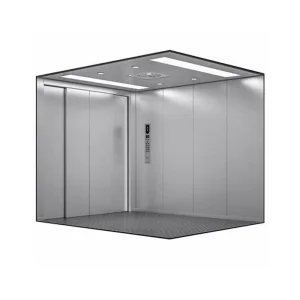
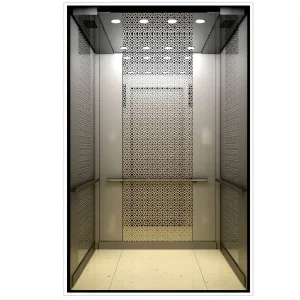
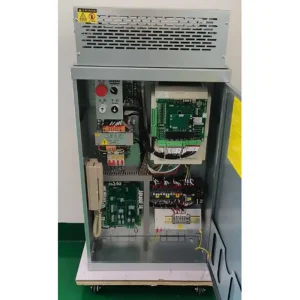
Explore our premium machinery list including highly durable freight systems, residential home lifts, and advanced controller architectures customized to secure vertical transit reliability.
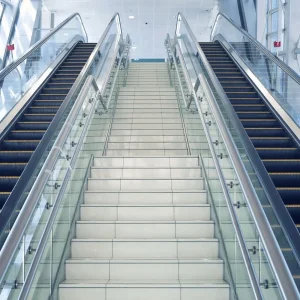
In the domain of modern civil infrastructure, wide escalators serve as the central arteries of vertical passenger movement. Defined by a nominal step width typically ranging from 1000mm to 1200mm, these systems are fundamentally designed to accommodate two parallel lines of passengers simultaneously. This dual-row configuration is not merely about comfort; it is a critical engineering response to dynamic bottlenecks in transit architecture.
From an optimization standpoint, selecting a wholesale wide escalator involves understanding the delicate balance between structural load capacities, kinetic energy consumption, and high-frequency cyclical stress. Our heavy-duty systems are built to address these elements head-on, ensuring compliance with international regulations while maximizing operational lifetimes.
The layout of a wide escalator involves intense structural computations. The truss deflection ratio, a key parameter defining structural stiffness under maximum load, is kept to a strict limit of L/750 (or L/1000 in heavy transit networks). By deploying finite element analysis (FEA) during the design phase, we ensure that the continuous vibration generated by hundreds of concurrent users is dispersed safely throughout the support anchors. This minimizes steel fatigue and prolongs the lifespan of the step-chains and guidance tracks.
For B2B procurement specialists, developers, and municipalities, calculating the peak traffic density is vital. A standard 600mm step forces a single-file line, leading to significant boarding queues in high-traffic scenarios. An 800mm step allows a single user with baggage, but restricts overtaking. The 1000mm wide escalator step, however, offers the optimal layout for standard dual-row usage.
Under theoretical conditions, a wide escalator operating at a velocity of 0.5 meters per second with a 1000mm step width can move up to 9,000 passengers per hour. If the speed is increased to 0.65 m/s (commonly utilized in heavy-rail and underground subway networks), the capacity increases to 11,700 passengers per hour. This massive throughput capability is critical for mitigating congestion and maintaining safe public environments, directly aligning with user intent for safety and reliability.
Innovation is at the core of our engineering process. Our development roadmap integrates AI-driven analytics, regenerative energy units, and advanced structural safety parameters.
Our upcoming generation of wide escalators features real-time sensor networks that monitor parameters like motor temperature, vibration frequencies, step-chain tension, and alignment. Using machine learning algorithms, the system predicts structural wear-and-tear and schedules maintenance before an issue occurs, dropping unplanned downtime by up to 60%.
Equipped with state-of-the-art Variable Frequency Drives (VFD) and regenerative braking modules, our escalators convert gravitational potential energy generated during downward travel into clean electrical energy. This power is fed back into the building's electrical grid, resulting in net energy savings of up to 45% during high-occupancy operations.
Integrating step gap lighting, dynamic comb skirt safety sensors, and smart emergency stop actuators. Infrared passenger detection sensors calculate occupancy speeds and slow the system down to an eco-idle mode when no passengers are detected, minimizing structural wear and optimizing runtime efficiency.
Providing robust, scalable vertical mobility architectures tailored for specific macro environments across global industries.
Metro lines demand continuous operation, often reaching up to 20 hours of runtime daily. Our heavy-duty wide escalators are equipped with reinforced main drive shafts, IP55-rated motors, and high-tensile steel steps to withstand heavy commutes. Integrated waterproofing structures make these escalators resilient against outdoor rain exposure and extreme municipal environments.
International airports deal with constant passenger flow carrying heavy luggage and pushcarts. Our wide escalators feature flat step-entrances (up to 4 horizontal steps) to help passengers stabilize their luggage before ascending. This reduces boarding accidents by over 30% in high-traffic commercial terminals.
For modern malls, retail landmarks, and exhibition centers, aesthetic integration is as important as durability. We offer customizable finishes, glass balustrades, under-step LED lighting setups, and sleek handrail profiles. These features match contemporary architectural styles while ensuring smooth, safe vertical transit for high-capacity retail flows.
Industrial vertical transportation requires specialized systems built for reliability. Our custom escalators are designed to resist dirt, oil, and dust buildup. They are perfect for transporting staff and equipment between factory floors, ensuring consistent operation and minimal maintenance overhead.
Operating from our modern manufacturing base in Ningbo, we apply Factory 4.0 standards to ensure precision and consistency. Utilizing robotic welding lines for truss construction, we maintain a tight mechanical tolerance of under 0.2mm, eliminating structural errors common in manual fabrication. Our computerized test towers simulate variable structural load conditions, checking every subsystem before shipment.
Our location in Ningbo provides direct access to one of the world's largest deep-water ports. This logistics advantage allows us to streamline supply chains, secure raw materials, and optimize international shipping timelines. By keeping key manufacturing stages in-house—including step manufacturing, drive system alignment, and controller programming—we guarantee high reliability and price-to-performance efficiency for all partners.
Delivering compliant, certified mechanical systems that conform to safety guidelines in every target region.
Every elevator and escalator we manufacture is designed, assembled, and tested under the strict guidelines of the latest EN-81 and EN-115 standards. These European safety codes govern step design, clearances, overload protections, comb plate triggers, and electric safety loops, ensuring safe operation in Europe, the Middle East, Asia, and Africa.
Our commitment to compliance is backed by certifications from international agencies. This ensures smooth regulatory approvals for building inspectors and municipal authorities during installation.
Our strategic partnerships with global brands, including Mitsubishi Middle East and ThyssenKrupp Africa, allow us to collaborate on new installations, system upgrades, and maintenance contracts. These partnerships demonstrate our commitment to quality and technical reliability across international regions.
Through our global distribution and support network, we supply spare parts and technical support to keep vertical mobility systems running smoothly across commercial and public spaces.
B2B purchasing requires balancing initial capital expenditure against long-term operation, maintenance, and energy costs.
Managing the Total Cost of Ownership (TCO) is key to maintaining project profitability. While customized systems might require a higher initial investment, they deliver significant cost savings over their lifecycle. Our wide escalators feature automatic lubrication systems, wear-resistant synthetic guides, and highly efficient microcomputers that reduce routine maintenance visits by up to 25%.
Additionally, our high component durability reduces the frequency of replacement parts. This helps project managers lower long-term maintenance costs and secure a higher return on investment (ROI).
Almost 20 years of dedication to quality, safety, and innovation in vertical transportation.
Established in 2006 by a group of industry specialists, Ningbo Bluetech Import & Export Co., Ltd. has grown into a trusted developer of elevators, escalators, and key components. With nearly two decades of R&D experience, we have built a reputation for reliable product quality and responsive service.
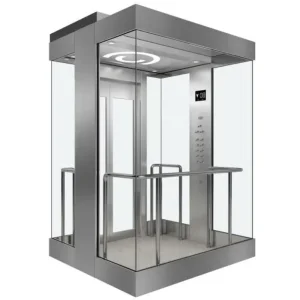
Our complete range of solutions includes home elevators, passenger elevators, sightseeing lifts, freight systems, and dumb waiters. Every system is built under latest safety codes like the European EN-81 and EN-115 standards, ensuring peace of mind for operators and passengers alike.
Today, our brand serves markets beyond China, exporting to over 30 countries including Germany, Singapore, Thailand, Saudi Arabia, the UAE, Egypt, Ethiopia, and Nigeria. Whether working on new structures or modernization projects, our team remains committed to safety, value, and client satisfaction.
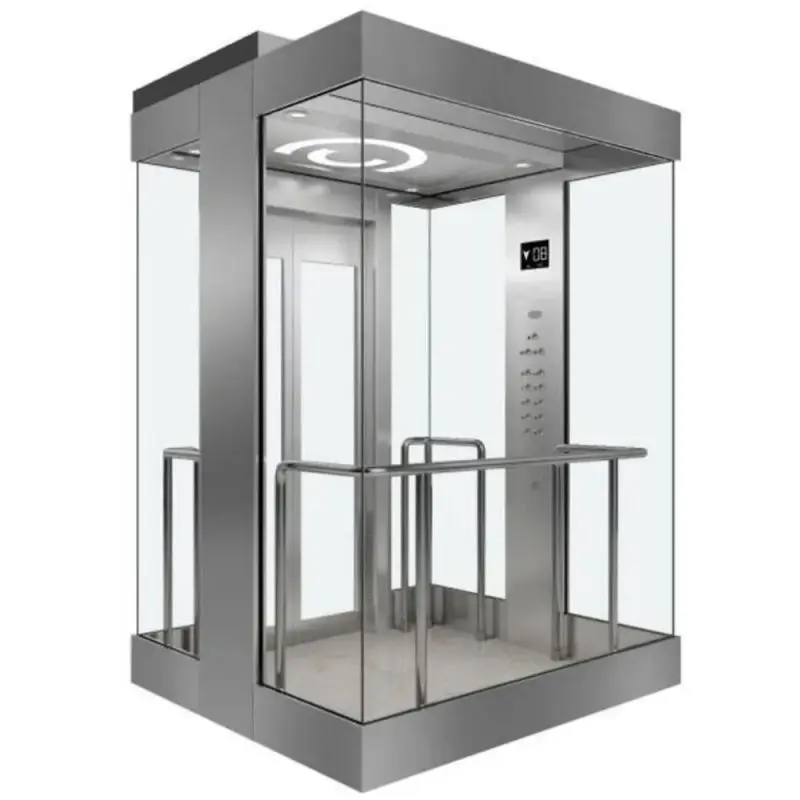
We work closely with global escalator and lift installers on new installations, system upgrades, and maintenance contracts. Our projects span from commercial office complexes to high-transit environments like the ACE Hotel series.
When you partner with Ningbo Bluetech, you gain support from experienced engineers dedicated to delivering reliable, safe products. We strive to provide functional, long-lasting vertical transportation systems tailored to your specific project needs.
Find answers to common questions regarding structural specifications, custom configurations, and international standards.
The standard inclination angles are 30° and 35°. A 30° inclination offers the highest ride comfort and safety, and is typically required for public transit and high-rise applications. A 35° inclination is a more compact solution, often selected for retail stores and commercial buildings where space is limited.
Our systems include up to 30 safety switches, including comb plate sensors, step deflection monitors, broken drive chain switches, handrail entry guards, and emergency braking systems. Every component is tested and certified to verify it complies with EN-115 and EN-81 safety codes.
Yes. Outdoor units are built with specialized weatherproofing, including IP55-rated motors, rust-resistant paint finishes, stainless steel steps, and integrated drainage systems to prevent water accumulation within the lower truss area.
Our standard manufacturing cycle is 3 weeks. For urgent projects, we can compress production to 2 weeks. Our proximity to the Ningbo port allows us to arrange fast customs clearance and secure direct container shipping to global destinations.
Yes. We design and manufacture custom components, including elevator cabins, controller panels, and complete modernization packages. Our engineering team provides support to local technical crews to help modernize older installations.
Explore our range of heavy-duty freight lifts, controllers, and residential elevators designed to support long-term operational needs.
 Bluetech