Industrial Guide to Small Dumbwaiter Systems
A Comprehensive Analysis of Design, Sourcing Dynamics, and Manufacturing Benchmarks for Architects and Global Procurement Teams
"In modern architecture, optimization of space is directly proportional to operational efficiency. Small dumbwaiters represent the critical micro-logistics link that bridges structural heights, reduces manual labor risks, and maintains hygiene integrity in commercial, medical, and residential structures."
1. The Global Landscape of Small Dumbwaiters: Market & Industrial Demand
Small dumbwaiters, technically defined as micro-freight elevators with load capacities typically ranging from 50kg to 300kg, have evolved from basic mechanical rope-and-pulley systems into highly automated, micro-computer-controlled logistics tools. Globally, rapid urbanization, rising real-estate prices, and stringent workplace health and safety laws have accelerated the integration of these compact lift systems into commercial buildings.
In high-density urban environments, multi-story buildings must optimize every square meter of floor space. Standard service elevators require massive shafts, machine rooms, and structural support systems, which diminish usable square footage. Small dumbwaiters bypass these issues by utilizing minimal structural footprints while offering rapid, vertical transfer of goods. This makes them indispensable in environments such as hotels, commercial kitchens, healthcare clinics, luxury residential properties, and high-tech manufacturing cleanrooms.
2. Technical Architecture of Dumbwaiter Systems
Understanding the core mechanical and electrical frameworks is crucial for procurement managers and project developers. Modern small dumbwaiters operate under two primary drive configurations:
Traction Drive Systems
Utilizes a counterweighted design driven by a friction sheave. Ideal for high-rise buildings requiring high speed, low power consumption, and quiet operations. Requires counterweight space but extends rope longevity.
Winding Drum Systems
A compact, counterweightless configuration where the hoisting rope winds directly onto a drum. Best suited for tight spaces and shorter travel distances (2-3 floors), maximizing the cabin size relative to the shaft.
VVVF Control & PLC
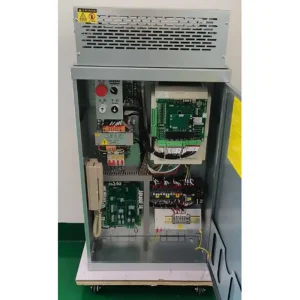
Variable Voltage Variable Frequency speed controllers coupled with PLC processors allow smooth acceleration/deceleration, leveling accuracy within 5mm, and self-diagnostic error reporting.
3. The Chinese Manufacturing Edge: Quality, Scale, and Supply Chain Integration
When sourcing small dumbwaiters globally, the focus naturally shifts to China, which accounts for the vast majority of the world's elevator component manufacturing and assembly. The industrial clusters located around Ningbo and Zhejiang provide unique supply chain integrations that yield substantial competitive advantages:
- Advanced Sheet Metal Automation: Chinese factories utilize automated laser-cutting systems, CNC bending machinery, and robotic welding lines. This level of automated production guarantees structural tolerances of less than 0.1mm, ensuring absolute vertical alignment of the guide rails and silent cabin operation.
- Unmatched Cost Efficiency: The proximity of raw materials (high-grade stainless steel) and specialized component suppliers (traction motors, control panels, safety gears) allows manufacturers like Ningbo Bluetech to offer competitive wholesale prices without compromising material thickness or safety.
- Strict Standardization Compliance: Top-tier Chinese factories design and test their lift mechanisms to comply with the European Union's EN 81-3 code for service lifts. From structural calculations to electrical circuit safety design, products undergo rigorous validation processes, making them fully compliant with Western construction standards.
4. Application Scenarios & Localization Requirements
Depending on the target market, small dumbwaiters must be adapted to different regional and sector-specific requirements:
Hospitality & Commercial Kitchens
In restaurants and luxury hotels, food safety and temperature retention are paramount. Dumbwaiters used here require food-grade AISI 304 or AISI 316 stainless steel cabins and doors. Removable internal shelves are mandatory to allow for quick sanitization. Thermal insulation of the cabin walls and heated shelving options are common configurations to keep food hot during transit between basement kitchens and rooftop dining areas.
Healthcare & Pharmaceutical Facilities
In clinical environments, small dumbwaiters are deployed to transport sterile instruments, specimens, medications, and medical records. Strict dust-free, cleanroom regulations must be adhered to. The control interface often incorporates contactless sensors, automated bi-parting doors, and UV-C germicidal sterilization lamps to prevent cross-contamination across different floors.
5. Global Industry Trends: Smart Tech and IoT Integration
The future of vertical freight transportation is increasingly defined by smart technologies and IoT (Internet of Things) integration. Modern dumbwaiter lines are moving beyond isolated mechanical systems to become fully connected nodes in automated building systems:
- Predictive Maintenance Alerts: Real-time tracking of motor cycles, leveling accuracy, and safety gear status can be monitored remotely. System diagnostics alert facility managers of potential issues before they cause downtime.
- Regenerative Drives: Energy saving is a key component of modern green building certifications (e.g., LEED). Variable frequency drives can recover excess energy generated during deceleration or gravity-assisted descents and feed it back into the building's electrical grid.
- Automation Syncing: Advanced warehouse and laboratory systems connect AGVs (Automated Guided Vehicles) and AMR robots directly with the dumbwaiter. The lift doors cycle open automatically when a robot approaches, allowing for fully autonomous material handling without human intervention.
6. Strategic Sourcing and Procurement: Why Choose Ningbo Bluetech
Procuring vertical transport solutions on a global scale requires working with a manufacturer that possesses both technical depth and a proven logistics framework. Ningbo Bluetech's robust export capabilities ensure smooth delivery, customs clearance, and long-term product reliability:
- Engineering Customization Power: Every building shaft is unique. Our team of in-house specialists designs custom cabin heights, customized door opening configurations (single-side, through-type, or adjacent-type), and customized travel heights to fit tight structural constraints.
- Fast Turnaround Cycles: Our integrated manufacturing supply chain enables us to complete orders within 3 weeks under standard configurations, and within 2 weeks for urgent projects, allowing contractors to meet tight project handovers.
- Quality Validation and Global Trust: We work in partnership with global market leaders such as Mitsubishi Middle East and ThyssenKrupp Africa. These collaborations ensure our designs and quality assurance systems are calibrated to the highest global standard.
Global Project Realizations
ACE Hotel Commercial Service Lift
Mixed-Use High-Rise Service Shafts
Residential Luxury Villa Goods Transfer
Frequently Asked Questions (FAQ)
Q1: What are the standard load capacities and dimensional options for small dumbwaiters?
Small dumbwaiters typically support loads from 50kg to 300kg. The cabin sizes depend on the load rating: for a 50kg capacity, a 500x500x600mm cabin is standard; for 100-200kg capacities, a 600x600x800mm or 800x800x1000mm cabin is common. Ningbo Bluetech offers custom sizing to fit existing structural shafts.
Q2: Can your dumbwaiters meet the European EN 81-3 code requirements?
Yes. All Ningbo Bluetech dumbwaiters are engineered, manufactured, and certified in accordance with the EN 81-3 standard for service lifts. This includes the implementation of certified door interlocks, overload alarms, rope-break protection devices, and micro-motion leveling sensors.
Q3: What are the primary differences between traction drive and winding drum dumbwaiters?
Traction dumbwaiters utilize a counterweighted setup, offering higher energy efficiency, quieter operations, and smoother ride control. This makes them ideal for multi-story buildings. Winding drum dumbwaiters wrap the hoist rope directly around a drum, eliminating the need for a counterweight. This makes them perfect for single-floor runs where shaft space is highly constrained.
Q4: How does Ningbo Bluetech guarantee corrosion resistance for dumbwaiters in commercial kitchens?
We use high-grade AISI 304 stainless steel for the entire cabin structure, landing doors, and guide frames. AISI 304 is resistant to food acids, moisture, and common chemical cleansers. For highly corrosive or saltwater environments (e.g., marine vessels), we offer AISI 316 stainless steel upgrades.
Q5: What is the average manufacturing and delivery lead time for wholesale orders?
Our standard production cycle for small dumbwaiters is 3 weeks. In urgent cases or specialized construction phases, we can fast-track the design and assembly processes to complete production within 2 weeks. Custom designs with complex certifications may add 1 week to the schedule.
Q6: Do you provide installation and post-sales technical support for overseas projects?
Yes. We supply comprehensive installation manuals, electrical wiring diagrams, and detailed video instructions. Our engineering support team is available online to assist during installation. We also offer a reliable warranty and replacement components to ensure your system operates continuously.


 Bluetech