An Architectural Analysis of Modern Transit Systems, Kinematic Transitions, and Safety Code Compliance.
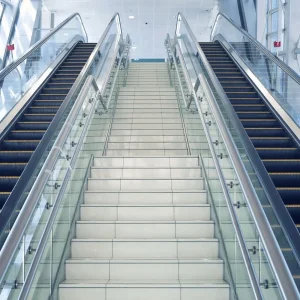
In modern high-traffic architecture, the movement of people relies on continuous vertical transport. Escalators represent complex kinematic machinery where structural engineering, metallurgy, and electronics converge. At the core of their design is the escalator horizontals configuration—the flat step run located at the top and bottom landings of the escalator. This segment regulates the transition from horizontal movement to incline, ensuring passenger stability and system longevity.
From an engineering perspective, escalator horizontals are critical for absorbing the kinetic forces exerted by passengers as they step onto the platform. These sections must be structurally reinforced to resist deflection and wear over millions of duty cycles. According to the international EN 115 and ASME A17.1 standards, the horizontal travel length is determined by the escalator's speed and angle of inclination. Higher speeds require longer horizontal runs—typically two, three, or four flat steps—to allow passengers ample time to stabilize before descending or ascending.
During the transition phase, the steps shift from a planar level state into a stepped profile. This vertical divergence requires meticulous tolerances within the track system. High-performance escalator guide rails are machined to sub-millimeter precision. A deflection of even 1 millimeter under load can accelerate roller wear, generate acoustic noise, and create micro-vibrations that degrade the passenger experience.
Furthermore, structural truss integrity is key. Our trusses utilize heavy-duty rectangular steel tubes, welded using robotic systems to guarantee consistent load distribution. This architecture prevents twist and sag under peak capacities, such as during holiday shopping rushes or rapid evacuation cycles in transit hubs.
Established in 2006 by a group of industry specialists, NINGBO BLUETECH has dedicated nearly 20 years to the research, design, and manufacturing of high-performance elevators and escalators. With decades of continuous development and innovation, our brand has established a reputation for safety, reliability, and precision engineering.
Our comprehensive solutions portfolio covers home elevators, passenger elevators, sightseeing elevators, freight elevators, dumbwaiters, and heavy-duty commercial escalators. All BLUETECH products are designed, manufactured, and tested to meet the latest EN-81 and EN-115 standards. By prioritizing human-centric design, robust safety mechanisms, and cost efficiency, we serve both domestic markets and clients in over 30 countries and regions globally.
Established In
Years of R&D Experience
Patents Secured
Export Countries & Regions
How Ningbo's Industrial Ecosystem and Advanced Manufacturing Deliver Cost-Efficiency and High Reliability.
Purchasing escalator horizontals and complete transit networks from China offers significant supply chain advantages. As a primary global hub for lift and escalator manufacturing, China provides a mature industrial ecosystem. For NINGBO BLUETECH, our strategic location in Ningbo grants us direct access to high-grade raw steel, specialized casting plants, and precision component manufacturers. This proximity reduces transit times for raw materials, allowing us to maintain a nimble production schedule.
Our manufacturing model leverages economies of scale while retaining customization capabilities. With automated tooling, robot welding lines, and laser-guided inspection systems, our factory delivers components with tight tolerances. This helps minimize assembly adjustments on site, lowering installation costs for building contractors.
Our engineering team delivers optimized spatial layouts and structural designs tailored to challenging architectural retrofits and seismic conditions.
We provide engineering responses, layout blueprints, and technical advice within 12 hours, minimizing project downtime.
Our long-term supplier alliances and structured purchasing processes allow us to offer competitive pricing without sacrificing component quality.
In addition, Ningbo Port is one of the world's busiest container hubs. This offers direct shipping lanes to global markets across Europe, North America, the Middle East, and Southeast Asia. Our proximity to the port reduces inland transit costs and risks, ensuring safe and timely delivery of components to your job site.
Navigating Global Regulatory Frameworks and Optimizing Mechanical Interfaces.
The global lift and escalator market is governed by rigorous safety standards. Compliance with codes like EN 115-1:2018 in Europe and ASME A17.1/CSA B44 in North America is mandatory. These standards specify safety factors for key components, including steps, chains, driving machines, and safety brakes. At NINGBO BLUETECH, compliance is integrated into our engineering phase, and all designs are validated through simulated stress analysis and prototype testing.
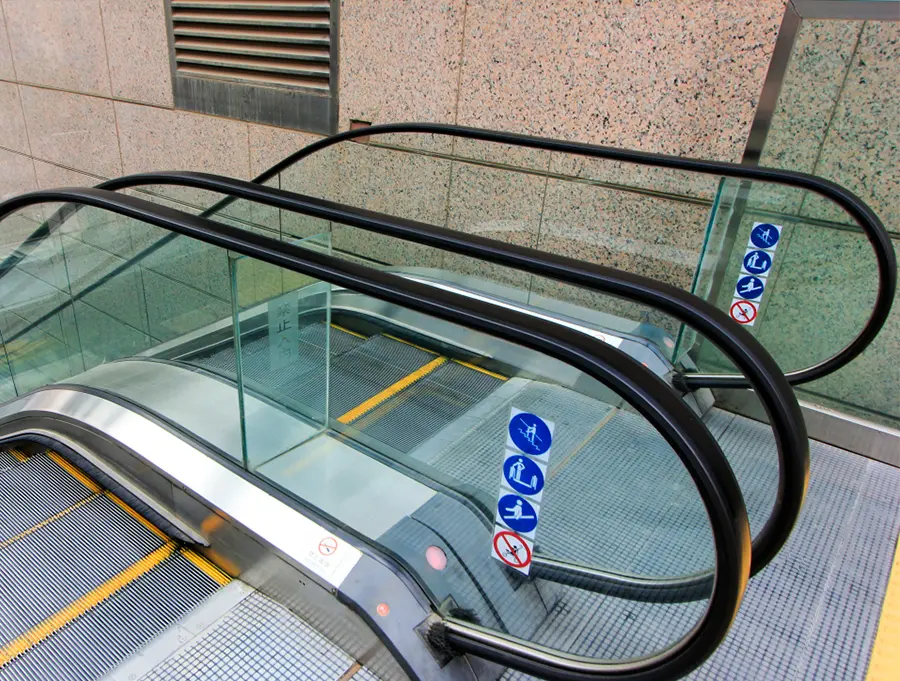
A primary safety consideration is the prevention of entrapment between the moving steps and the stationary skirt panel. To address this, we engineer our escalator horizontals with low-friction skirt panels, dynamic skirt brush deflectors, and yellow safety boundaries. The transition zones are monitored by electronic safety switches that halt operation if any structural misalignment or object insertion is detected.
We also offer localized engineering support. Because building codes vary by region, we provide customized drawings and engineering support to ensure smooth integration with local power systems, seismic mounts, and building management networks. Whether you need specific electrical configurations, fire-resistant wiring, or auxiliary braking systems, our engineers adapt our products to fit your local regulatory requirements.
Collaborating with international industry leaders is a cornerstone of our global growth. NINGBO BLUETECH partners with key elevator and escalator brands, including Mitsubishi Middle East and ThyssenKrupp Africa. We collaborate on new installations, mechanical modernization, and maintenance projects globally.
Modernization is an increasing focus for aging urban infrastructure. Retrofitting older systems with modern escalator horizontals, energy-efficient VVVF drive controllers, and smart sensor arrays extends system lifespan while reducing energy consumption by up to 30%. Our design team develops customized modernization kits that fit existing structural concrete wells, reducing structural demolition and project costs.
Whether you are a building owner seeking to improve energy efficiency or an OEM installer looking for a reliable manufacturing partner, BLUETECH offers technical support from project design through to final commissioning. Our track record of successful installations in demanding environments demonstrates our dedication to engineering quality and customer satisfaction.
Optimizing Vertical Transport Configurations for Specific Architectural Challenges.
Escalators operate in diverse physical environments, each presenting unique engineering demands. The configuration of the escalator horizontals and outer cladding must be selected to match the specific requirements of the application scenario.
Transit hubs experience sustained high passenger volumes. In these environments, escalators must run for up to 20 hours a day under heavy load. The escalator horizontals in public transit subways typically feature at least three to four flat steps at each landing, easing the transition for passengers carrying luggage or pushing strollers. High-wear step chains, heavy-duty guide rails, and specialized moisture-resistant motors are standard specifications to ensure continuous service and passenger safety.
For retail spaces, aesthetic integration is as important as reliability. In these settings, escalator horizontals often feature LED under-step lighting and glass balustrades to complement the interior design. We use advanced VVVF (Variable Voltage Variable Frequency) controllers to manage the escalator speed based on passenger traffic. When no passengers are detected, the system slows to a standby speed, reducing power consumption and wear on mechanical components.
Escalators installed in outdoor transit bridges, amusement parks, or coastal marine terminals are exposed to rain, humidity, and salt spray. These conditions require robust anti-corrosion measures. We manufacture outdoor escalator horizontals using hot-dip galvanized steel frames, stainless steel steps, and water-resistant electrical enclosures. Drainage channels and oil-water separators are also integrated into the lower well of the truss to manage rainwater accumulation.
Insights on Procurement, Engineering Design, Safety Norms, and Global Supply Logistics.
 Bluetech