Explore our foundational range of vertical transit solutions engineered to international standards.
Analyzing the evolution, technical milestones, and application scenarios of dumbwaiter elevators in commercial and industrial structures.
In the modern vertical architectural environment, logistics optimization has shifted from heavy-capacity freight transport to high-frequency, small-volume internal transport. Dumbwaiters (also known as service lifts, food lifts, or micro-freight lifts) serve as the backbone of this micro-logistics ecosystem. Globally, urbanization and real estate constraints have prompted commercial kitchens, hospitals, laboratories, and high-end residences to optimize horizontal floor footprints in favor of vertical utility. According to international market intelligence, the demand for dumbwaiter integration has grown by 7.4% CAGR over the past decade, driven by automation trends and the necessity to reduce manual handling overheads.
Technological convergence is reshaping dumbwaiter architectures. Legacy mechanical relay systems are rapidly phasing out in favor of micro-computer VVVF (Variable Voltage Variable Frequency) systems. Crucial industry developments focus on three areas: hygiene optimization (e.g., contactless operations, automatic doors, and integrated UV disinfection cabinets), real-time status monitoring through IoT platforms, and energy regeneration devices. Modern dumbwaiters are no longer simple mechanical shafts; they are intelligent subsystems linked directly to building management networks, enabling autonomous call management and automated material handling.
Procuring micro-elevators from verified factories requires strict compliance assessments. Under Google's E-E-A-T (Experience, Expertise, Authoritativeness, Trustworthiness) guidelines, reliable manufacturers must demonstrate adherence to global safety mandates. Standards such as Europe's EN 81-3 (Safety Rules for the Construction and Installation of Lifts - Part 3: Electric and Hydraulic Service Lifts) govern load calculations, structural framing, buffer designs, and emergency landing mechanisms. Selecting dumbwaiters built to these standards ensures building safety compliance, mitigates structural liabilities, and guarantees structural integrity under high-frequency operational duty cycles.
Different regions and layouts dictate custom configurations. For instance, in European hospitality contexts, dumbwaiters require counter-height bi-parting doors to streamline tray movement. Conversely, industrial cleanrooms in East Asian microelectronics factories demand floor-level access lifts constructed with electro-polished SUS304 or SUS316 stainless steel to prevent particulates from compromising air filtration metrics. Understanding localized applications allows architects to specify the correct hoistway footprint and door mechanisms early in the drafting process.
Ningbo Bluetech Import & Export Co., Ltd. was established by a specialist group in 2006. Dedicated to the elevator and escalator sectors, we possess nearly 20 years of professional industry experience. Through decades of continuous research and development, we have earned a reputation for excellent build quality, reliable customer service, and flexible system engineering.
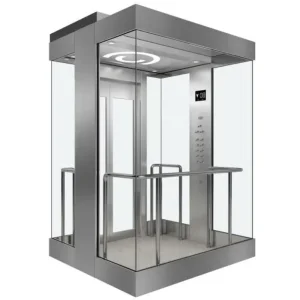
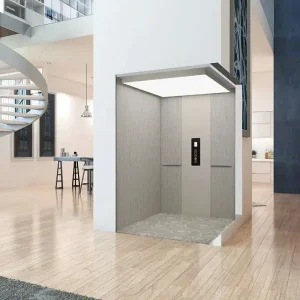
Our comprehensive structural elevator configurations comply strictly with the latest EN-81 European regulations. Our core vertical transport solutions span across home elevators, high-capacity passenger lifts, architectural panoramic elevators, industrial freight lifts, and customizable heavy-duty dumbwaiters. Combining human-centric industrial design with advanced manufacturing, we provide competitive options globally, serving over 30 countries, including Germany, Singapore, Thailand, Saudi Arabia, the UAE, Egypt, Ethiopia, and Nigeria.
Ningbo Bluetech's distribution and installation partnerships extend across multinational giants, including Mitsubishi Middle East and ThyssenKrupp Africa. We collaborate on new installations, mechanical modernization upgrades, and long-term preventative maintenance plans.
When selecting Bluetech, you partner with industry engineers focused on safety, performance, and long-term sustainability. Our project track record highlights our dedication to customized structural engineering, supporting demanding vertical logistics requirements.
Ensuring all shipments comply with regional safety protocols and custom architectural configurations worldwide.
Our integration of advanced mechanical systems ensures long-term operational efficiency and safety.
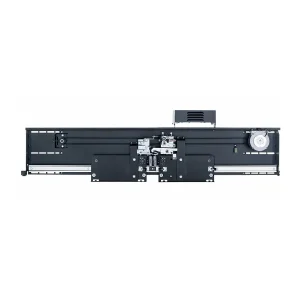
Utilizing variable-frequency micro-controllers to ensure smooth acceleration, deceleration, and high leveling accuracy (+/- 2mm).
Our internal engineering team designs customized structural layouts to match existing shafts and irregular building configurations.
We provide structural drawings, component quotes, and configuration advice within a 12-hour window for all projects.
Standard dumbwaiters and cargo lifts are produced within 3 weeks, with urgent project cycles completed in 2 weeks.
A comprehensive examination of engineering challenges, shaft dimensions, and motor mechanics for high-traffic environments.
Selecting the propulsion method dictates shaft construction costs and lifecycle maintenance. Traction dumbwaiters are preferred for medium to high-rise structures (exceeding 3 stops) due to their higher travel speeds (ranging from 0.4 m/s to 1.0 m/s) and energy-efficient motor configurations. Using steel wire ropes or high-grip polyurethane belts paired with a counterweight system, traction units minimize electrical draw.
Hydraulic configurations, while less common for multi-floor configurations, remain suitable for low-profile, high-capacity industrial demands (above 250 kg loads) where overhead clearance is restricted. Hydraulic systems transfer load weight directly to the building's pit floor, reducing overhead structural stress.
To maintain efficiency across commercial spaces, dumbwaiters must align with industry-specific workflows:
The next stage of vertical transport involves integrating dumbwaiters with Automated Guided Vehicles (AGVs) and Autonomous Mobile Robots (AMRs). By linking the elevator controller to the local network via APIs, dumbwaiters can coordinate door cycles and floor calls automatically, allowing logistics robots to enter, travel, and exit without human intervention.
Addressing the common design and installation questions asked by mechanical engineers, architects, and procurement managers.
Standard structural designs for a 100 kg capacity dumbwaiter typically require a shaft footprint of approximately 1000 mm (width) by 1000 mm (depth). The internal cabin dimension translates to 800 mm x 800 mm x 1000 mm. For larger 250 kg configurations, the shaft dimensions increase to approximately 1300 mm x 1300 mm. Pit depths can range between 250 mm to 500 mm, while overhead clearance requires a minimum height of 3200 mm to accommodate modern overhead machine rooms.
Compliance with EN 81-3 is essential for vertical service lifts. It mandates specific safety features, including electrical interlocks that prevent operation unless all doors are locked, mechanical safeties that stop the cabin if wire rope tension drops, terminal limit switches, emergency buffering devices, and access doors designed to prevent entry by personnel.
Yes. Modern self-supporting metal structures allow retrofitting dumbwaiters without pouring a concrete shaft. These self-contained frameworks house the guide rails, suspension mechanisms, and control systems, requiring only floor cutouts and a stable wall support bracket at each floor level.
Food service lifts require food-grade materials to prevent bacterial growth and simplify sanitation. Cabin interior surfaces must be composed of grade SUS304 stainless steel with smooth, seamless joints. Removable shelves allow thorough sanitizing, while automated UV-C sanitation cycles help eliminate pathogens on high-contact interior components.
Explore our structural lifts and high-precision elevator control interfaces designed for global projects.
 Bluetech