Explore our high-performance elevators, escalators, and structural control systems certified for global deployment.
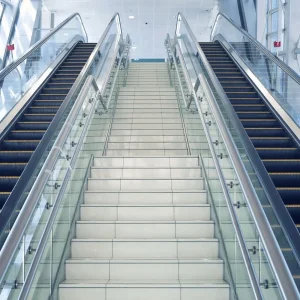
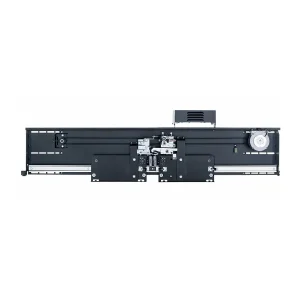
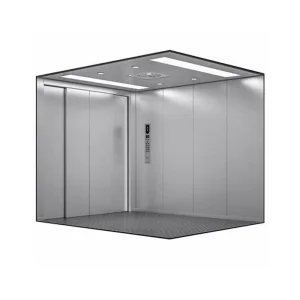
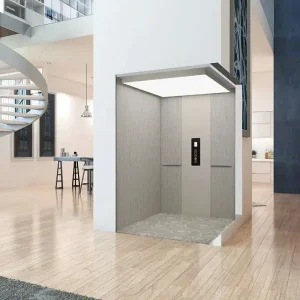
Urban density demands reliable heavy-duty vertical transit. Public escalators operating in subways, airports, and major transit hubs require design parameters vastly different from light commercial department store variations. From structural integrity and outdoor anti-corrosion safeguards to continuous operation duty cycles, the specifications are critical.
As the global center of gravity for manufacturing infrastructure, China's public escalator factories have transitioned from cost-focused assembly shops to high-technology R&D centers. Factories in industrial corridors like Ningbo and Shanghai are redefining reliability standards, leveraging integrated supply chains to build machinery that complies with EN 115-1 and ASME A17.1 international safety parameters.
A trusted global leader in engineering and exporting advanced elevator and escalator systems.
Established by a group of industry specialists in 2006, Ningbo Bluetech has dedicated nearly 20 years to the development, design, and manufacturing of elevators and escalators. Through continuous investment in research and quality optimization, we are recognized for high safety standards, premium durability, and localized service capability.
Our comprehensive portfolio covers home elevators, high-capacity passenger elevators, scenic sightseeing elevators, heavy freight elevators, dumbwaiters, and public-use heavy-duty escalators. Every single unit we produce is meticulously designed, tested, and assembled under the rigorous criteria of the EN-81 and EN-115 standards. By merging humanized aesthetic designs with state-of-the-art emergency systems, we ensure our global partners receive market-leading solutions at competitive prices.
Our solutions have been exported to more than 30 countries across the globe, including key markets such as Singapore, Thailand, Saudi Arabia, the United Arab Emirates, Germany, Egypt, Ethiopia, and Nigeria. We work actively alongside global engineering departments to build smarter urban centers.
We partner with prominent international elevator enterprises, executing new lift installations, complex modernization upgrades, and ongoing maintenance projects. Notable alignments include joint ventures and engineering collaborations in the Middle East and Africa with partners like Mitsubishi Middle East and ThyssenKrupp Africa.
When you work with Ningbo Bluetech, you align with a team of seasoned vertical transit specialists focused on structural performance, lifecycle cost minimization, and environmental sustainability.
Innovating public escalator engineering through artificial intelligence, materials science, and power regeneration.
Future escalator platforms utilize micro-electromechanical sensors (MEMS) along critical components. Embedded sensors analyze vibration, chain tension, and bearing temperatures. This data is processed locally by smart controllers to predict failures before they happen, minimizing system downtime.
Our VF control systems feed power back to the grid. In high-density settings, downward passenger travel generates kinetic energy. Regenerative drives convert this potential energy into electrical energy, decreasing operational utility costs by up to 40%.
We build our step systems using anti-corrosive, marine-grade aluminum alloys. High-humidity environments, like underground railways and coastal stations, require steps that resist oxidation, prevent deformation, and deliver high structural yield strength.
Customizing escalator configurations to match the specific physical and operational demands of regional projects.
Heavy-duty systems built for continuous daily operation. Designed to handle peak-hour loads, with IP55 protection ratings, outdoor weatherproofing, dynamic anti-reverse mechanisms, and structural trusses constructed from grade-A structural steel.
Continuous horizontal moving walks and vertical escalators with dynamic speed adjustments. Features include extra-wide treads to accommodate baggage trolleys, soft-start systems, and low-noise gearboxes for passenger comfort.
Elegant structural aesthetics paired with high-performance operations. Customizable glass balustrades with continuous under-handrail LED lighting options, helping draw foot traffic while maintaining strict passenger safety controls.
Our manufacturing strategy centers on vertical integration and localized supplier networks. Based in the Ningbo industrial corridor, we source precision components, heavy-duty gearboxes, and structural trusses from regional suppliers. This structural framework protects our clients from global shipping volatility and logistics disruptions.
Our production facilities utilize automated welding systems and laser cutting machinery to ensure consistency across every structural truss. Because we control both manufacturing and export operations directly, we compress lead times without sacrificing safety. Standard production runs are completed in 3 weeks, and urgent projects can be delivered in 2 weeks under specialized parameters.
Before leaving the factory floor, every public escalator undergoes dynamic load testing, noise level measurement, and electronic sensor diagnostics. Our in-house testing tower allows us to simulate field conditions, ensuring compliance with local codes prior to shipping.
Securing project approval in foreign markets through safety compliance and responsive local engineering partnerships.
Our public escalators are built to EN 115-1:2018 (Safety of escalators and moving walks) and ASME A17.1 (Safety Code for Elevators and Escalators) standards, facilitating local authority approvals and certification processes.
We operate a responsive support desk that guarantees replies to all technical and maintenance questions within 12 hours. We work with local mechanical networks to support installation and routine servicing schedules.
We work in tandem with local installation crews and global elevator maintenance operators to manage the equipment lifecycle. Our engineering team assists with drawings, electrical diagrams, and custom configurations.
For municipal transit systems and large developers, buying a public-use escalator involves analyzing long-term Total Cost of Ownership (TCO) alongside initial capital costs. Operating expenses, energy consumption, and spare parts availability heavily influence project return on investment over a 20- to 25-year operational lifecycle.
When drafting Requests for Proposals (RFPs), specify parameters for transit load requirements, outdoor protection coatings, brake systems, and inverter efficiency. By partnering with factories that manage design, manufacturing, and shipping under one roof, buyers can bypass third-party markups and secure competitive pricing.
Specify hot-dip galvanized steel trusses for outdoor and semi-outdoor environments to prevent rust formation.
Request high-efficiency helical gearboxes or gearless drives to reduce power draw and mechanical wear.
Include specifications for broken drive-chain switches, skirt safety devices, comb plate sensors, and aux brakes.
Answers to common questions regarding engineering standards, procurement logistics, and support.
Under standard operation and proper maintenance, a heavy-duty public transit escalator is engineered for an operational lifespan of 20 to 25 years. This longevity relies on structural components such as hot-dip galvanized steel trusses, robust step chains, and regular lubrication cycles.
Our public transit escalators are designed, manufactured, and verified under safety code systems. All units conform to European Standard EN 115-1:2018 and American Standard ASME A17.1. We supply compliance documentation, mill test certificates, and third-party certifications (TÜV, CE) to streamline local compliance inspections.
We integrate Variable Frequency Drives (VFD) that feature intelligent standby modes. When sensor systems detect zero passenger traffic, the escalator transitions to an energy-saving slow speed or sleep mode, ramping back up when a passenger approaches the entry zone.
We leverage a regional supply chain and standardized component manufacturing. This lets us complete fabrication of standard escalators in 3 weeks, and urgent projects can be produced in 2 weeks under optimized schedules.
For installations exposed to the elements, we configure units with full hot-dip galvanized trusses, IP55- or IP66-rated water-resistant electrical housings, stainless steel landing plates, automatic lubrication pumps, and oil-water separation drain systems to manage rainwater runoff.
Yes. Our modernization program upgrades mechanical and electrical components—including motors, control boxes, steps, and handrails—while keeping the main structural truss intact. This lowers project costs and reduces building downtime during construction.
By collecting sensor data on chain vibration, motor temperatures, and alignment deviations, maintenance crews can target worn components before they lead to structural failures, moving from scheduled maintenance to targeted predictive servicing.
We provide a comprehensive warranty covering structural trusses and key electrical-mechanical components. Post-sale, clients have direct access to our engineering team, CAD drawings, installation guides, and replacement part inventories.
Ensure seamless movement in your projects with our full range of certified elevators, escalators, and key sub-assemblies.
 Bluetech