In modern architectural planning, hospitality operations, and medical facility layouts, vertical logistics optimization serves as a cornerstone of operational efficiency. A **Plate Up Dumb Waiter** (often termed a waist-height loading service lift or counter-level catering elevator) is an indispensable asset engineered specifically to transport food plates, culinary equipment, medical supplies, and small payloads between multiple floors. Unlike floor-level models designed for heavy carts, plate-up configurations feature landing doors situated at counter height (typically 700mm to 900mm from the finished floor). This configuration minimizes manual lifting, respects ergonomic pathways for service staff, and maximizes workflow velocity in high-density environments like commercial kitchens, boutique restaurants, cleanrooms, and multi-level private residences.
As the international construction and real estate sectors shift toward dense, multi-tiered urban architectural footprints, the reliance on high-throughput, low-maintenance vertical transit mechanisms has expanded. To meet this demand, China has emerged as the premier manufacturing powerhouse and global hub for plate-up dumb waiters. Working under strict adherence to international safety parameters such as the **EN 81-3 Standard** for service lifts and various regional building codes, China-based suppliers offer custom-engineered dumb waiter systems that blend advanced manufacturing dynamics with cost efficiency. Industry leaders like **Ningbo Bluetech** have spearheaded this development by applying advanced materials, micro-controller software, and eco-conscious drive modules to traditional dumb waiter systems, enabling clients worldwide to secure robust solutions without incurring prohibitive capital overheads.
Information Gain Indicator: Modern plate-up dumb waiters do not merely move freight vertically. They act as integrated links in the smart building ecosystem. By implementing precision microprocessors, antimicrobial food-grade stainless steels, and smart door mechanisms, these systems satisfy both high-hygiene food regulations and fast-paced commercial delivery demands.
To assist architects, structural engineers, and facility managers in drafting exact specifications, this technical roadmap details the core performance metrics, structural parameters, and layout components of plate-up dumb waiter systems manufactured in China.
VVVF control ensures acceleration and deceleration curves are exceptionally smooth. This mechanism stops food plates from shifting, prevents liquid spills, and diminishes mechanical wear, while cutting power usage by up to 40% compared to traditional single-speed relays.
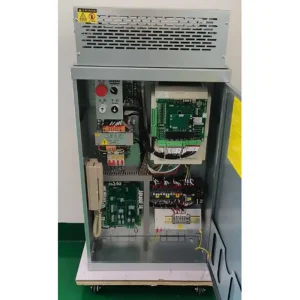
Equipped with integrated self-diagnostic displays, real-time error logging, and smart auto-leveling logic. The controller dynamically coordinates door interlocking safety matrices, landing call buttons, and overload indicators.
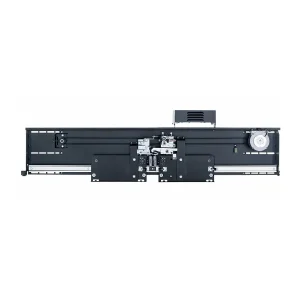
Features mechanical and electrical interlocks that prevent the lift from operating unless all landing doors are securely closed and locked. Car doors can be specified as manual bi-parting or automatic motorized shutters for touchless convenience.
When engineering these lifts, the structural dimensions and material integrity must align with the target payload. The following data details the standard design parameters for China plate-up dumb waiters:
The sourcing architecture of China's dumb waiter suppliers has transitioned from assembly-line manufacturing to intelligent Industry 4.0 methodologies. Industrial centers like Ningbo and Suzhou leverage advanced manufacturing infrastructure. This ecosystem guarantees that each plate-up dumb waiter complies with international standards, while keeping production lead times minimal.
Through the integration of robotic laser cutting systems, automatic welding gantries, and digital CNC bending stations, China-based factories minimize human error and structural variance. Laser cutting of stainless steel cabins guarantees a seamless fit and clean finishes, which are vital for meeting health and safety standards. Furthermore, by sourcing from a localized supply chain of copper motors, high-tensile guide rails, and specialized electronics, suppliers can absorb global economic fluctuations, providing stable pricing structures and component availability to international distributors.
This streamlined supply chain yields a significant reduction in lead times. While European and North American suppliers may require 8 to 12 weeks for production, Chinese factories like **Ningbo Bluetech** can finalize custom engineering and manufacture complete systems in just **3 weeks (and down to 2 weeks for urgent projects)**. This capability keeps fast-tracked construction projects on schedule.
The application of plate-up dumb waiters spans across various commercial, institutional, and residential fields. Each sector has specific operational requirements, which Chinese manufacturers resolve through targeted modifications:
Optimized for food safety and presentation. Double-deck cabins allow hot food plates to be kept separate from cold courses. Thermal insulation elements can be integrated into the car cabin to maintain dish temperature during vertical transit.
Requires strict infection control and decontamination compatibility. Built using marine-grade stainless steel with hermetic door seals to prevent air pressure leaks and contamination between floors.
Focuses on quiet transport and smooth movement. Incorporates anti-vibration isolation mounting pads, noise dampeners, and acceleration controls to prevent damage to historical materials.
For international buyers, sourcing elevator systems requires careful navigation of technical compliance, local safety certifications, and customs frameworks. The primary standards that a reputable China dumb waiter manufacturer must satisfy include:
Moreover, global procurement teams need to evaluate cargo packaging standards. When shipping lifts from China, structural assemblies must be enclosed in IPPC-certified fumigation-free wooden cases. This packaging shields sensitive components like microprocessors, variable frequency drives, and guide rails from saltwater humidity and physical impact during sea transit.
Established in 2006 by a consortium of vertical transportation engineers, Ningbo Bluetech Import & Export Co., Ltd. has dedicated nearly 20 years to the research, development, and manufacture of high-reliability elevators, escalators, and specialized service dumb waiters. By combining humanized engineering with strict adherence to quality assurance, Bluetech brand systems deliver reliable vertical transportation at a balanced price point.
Our solutions range from luxury home elevators and heavy-duty freight elevators to specialized plate-up dumb waiter systems. Every product is engineered to comply with the latest EN-81 safety standards. This engineering foundation has enabled us to build a global supply network, exporting to over 30 countries, including Singapore, Thailand, Saudi Arabia, the United Arab Emirates, Germany, Egypt, Ethiopia, and Nigeria.
Our commitment to excellence is reflected in our ongoing collaborations with international elevator organizations. We work alongside global partners, including Mitsubishi Middle East and ThyssenKrupp Africa, on both new installation projects and modernization or maintenance operations. Sourcing from Ningbo Bluetech connects you with industry professionals dedicated to reliable manufacturing and consistent engineering support.
We integrate modern technology into our product configurations, such as intelligent VF control loops, integrated emergency rescue systems, and energy regeneration feedback modules. This technological focus ensures that every Bluetech dumb waiter meets high performance and sustainability expectations.
Our engineering team collaborates closely with clients across our global network, matching technical requirements with project site parameters. During the design phase, we align structural parameters, dimensional constraints, and material specifications with local building requirements. Below are representative projects showing our global reach:


The primary difference is the loading height. A plate-up dumb waiter is installed with its landing doors at counter height (typically 700mm to 900mm above the floor). This setup allows operators to load plates, trays, and small items directly from kitchen counters without bending down. Floor-level dumb waiters, in contrast, open flush with the floor to allow wheeled carts, heavy barrels, or larger bins to be rolled in directly.
We use food-grade SUS304 stainless steel for our standard kitchen and catering configurations, which offers reliable resistance to moisture, organic acids, and frequent cleaning. For medical applications, laboratory cleanrooms, or marine environments, we recommend SUS316 stainless steel, which contains molybdenum for enhanced protection against chloride corrosion and sanitizing agents.
A Variable Voltage Variable Frequency (VVVF) drive regulates motor speed by adjusting voltage and frequency. This results in smooth acceleration and deceleration, preventing liquid spills or plate shifts during transit. Additionally, VVVF drives reduce starting currents, lower thermal stresses on the motor, and decrease energy usage compared to single-speed AC motors.
Our dumb waiters are equipped with mechanical and electrical door interlocks that halt operation if any landing door is open. We also integrate overload sensors, emergency stop switches, final limit switches, slack-rope safety devices (which stop the motor if a cable slackens), and warning buzzers to alert operators to any operational faults.
Yes, our engineering team frequently accommodates tight spatial envelopes. In projects with restricted headroom, we can deploy a Machine-Room-Less (MRL) layout, placing the traction machine inside a side alcove or directly in the hoistway overhead, which avoids the need for a dedicated structural machine room.
 Bluetech