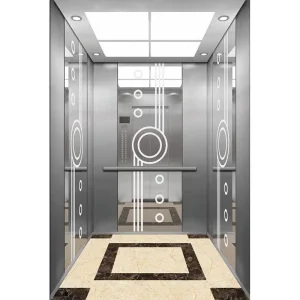
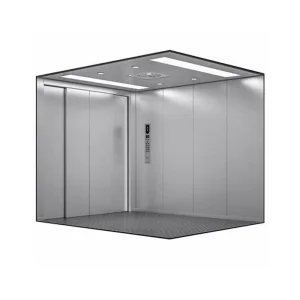
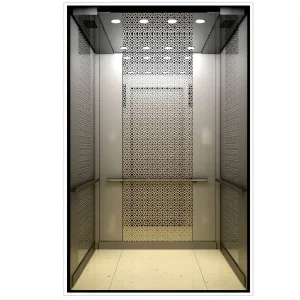
In modern luxury residential architecture, structural spatial efficiency has evolved from a premium option into a vital design criteria. Historically, traditional residential elevators dictated structural layout modifications, demanding deep concrete pits ranging between 1200mm and 1500mm to safely contain mechanical buffers, structural counterweights, and support frames. For urban developers, retrofitting historical structures or high-density luxury penthouses with these traditional systems was structurally unfeasible. Deep pit excavation threatens foundation integrity, compromises moisture barriers, and introduces high costs.
To overcome these challenges, structural engineers and architects have shifted towards Low Pit Home Elevators. Designed to operate safely with minimal pit depths (often between 100mm and 300mm), and in some scenarios, completely pitless interfaces, these systems represent the peak of modern space optimization. Incorporating machine-room-less (MRL) layout methodologies, compact traction configurations, and high-efficiency guide rails, low pit elevators integrate seamlessly into existing subfloors. This technological shift enables the modernization of older properties, protects historical foundations, and unlocks the spatial limits of multi-family residences, urban townhouses, and luxury villas.
The global demand for low pit home elevators is growing rapidly. Driven by structural constraints in urban locations, populations seeking long-term residential accessibility, and a design trend favoring minimalist, seamless glass structures, low-pit configurations are now the standard specification for architectural teams worldwide. This structural transformation requires high engineering precision, demanding that China's top manufacturers implement advanced production processes to ensure structural stability and safety compliance.
Established in 2006 by a specialized group of elevator engineering veterans, Ningbo Bluetech has dedicated nearly two decades to R&D, manufacturing, and global supply of advanced elevators and escalators. The company has evolved into a highly respected manufacturer, delivering custom-tailored residential lifts, commercial escalators, high-capacity cargo lifts, and components to international markets.
All Bluetech brand systems are designed, constructed, and rigorously tested in strict compliance with the latest European harmonized standard, EN-81. This alignment ensures that every low-pit elevator shipped from our production facility offers robust safety, reliable mechanics, and outstanding engineering quality. Serving over 30 countries globally—including Singapore, Germany, Thailand, Saudi Arabia, the UAE, Egypt, Ethiopia, and Nigeria—Ningbo Bluetech delivers high-value vertical transportation solutions to local developers, architectural firms, and distributors alike.
Procuring custom low pit home elevators presents complex challenges for international engineering firms, real estate developers, and lift installation networks. Unlike standard pre-fabricated components, low pit elevators must adapt to strict spatial, load, aesthetic, and local regulatory criteria. B2B buyers require detailed transparency across three core vectors: regulatory compliance, architectural adaptability, and long-term mechanical reliability.
First, compliance with standards such as EN-81-20/21, ASME A17.1, or local building codes is essential. B2B procurement managers require certified components, including overspeed safety gears, buffer systems, and failsafe controllers, to pass rigorous local government safety inspections. Second, space customization is key. Every residential shaft is unique; layout dimensions, structural column placements, and local structural variations demand flexible guide-rail systems and custom cabin dimensioning. Third, supply chain speed and reliability are vital. Projects depend on reliable shipping, clean documentation, responsive technical support, and accessible replacement parts.
Comprehensive pre-sale support addressing structural, spatial, and mechanical requirements, ensuring code compliance before manufacturing begins.
Utilizing high-end CNC machining, fiber-laser cutting, and robotic welding lines to deliver tolerances below 0.1mm for guide-rail alignment.
Strategically located near the Ningbo-Zhoushan Port, offering streamlined logistics, shorter transit times, and secure international packing.
The manufacturing ecosystem of Ningbo, China, is one of the world's most advanced clusters for mechanical and electrical engineering. At Ningbo Bluetech, we leverage this concentration of specialized steel mills, precision electronics manufacturers, and skilled labor. Integrating these resources allows us to offer shorter lead times, lower manufacturing costs, and reliable product quality. This geographical edge underpins our Factory 4.0 blueprint: combining IoT logistics, automated high-precision manufacturing, and data-driven quality checks.
Our manufacturing processes feature CNC laser profiling, computerized guide-rail testing, and robotic frame welding. This advanced automation minimizes the human error margin that often affects structural elevator components. By standardizing component fitment, we reduce onsite install complications. In addition, our robust local supply chain ensures we remain resilient against global raw material fluctuations. Our long-term relationships with key component suppliers allow us to source high-grade, low-wear materials at stable price points, enabling us to offer competitive pricing without compromising on safety or materials.
Allows historic structures in urban Europe to gain modern accessibility. By eliminating the need to excavate load-bearing masonry foundations, it preserves structural integrity while complying with local heritage protection regulations.
Designed for high-end penthouses in dynamic cities like Dubai and Singapore. Installed directly onto existing floor structures without breaching the ceiling of the unit below, resolving complex structural design issues.
Offers space-conscious accessibility for boutiques, multi-level cafes, and private galleries. Integrates easily, occupies minimal floor space, and meets ADA accessibility requirements.
Our experienced engineering team creates custom solutions for complex architectural layouts, narrow shafts, and limited overhead spaces.
We prioritize customer support with a clear standard: technical solutions and quotes are delivered within 12 hours, pre-sale or post-sale.
Trusted by industry players, including Mitsubishi Middle East and ThyssenKrupp Africa, for modernization and new lift projects.
With modern engineering, low pit home elevators require a minimum pit depth of 100mm to 300mm, depending on cabin size, speed, and safety components. In contrast to traditional systems that require over 1000mm, these compact elevators install onto the floor slab, requiring only minor subfloor modifications.
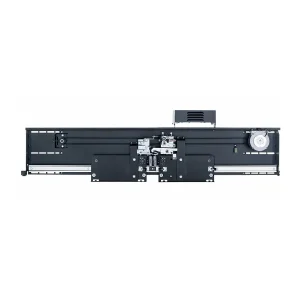
Yes. Customization is a key design feature. Our team adapts layout configurations, guide-rail placements, and door systems (such as side-opening, center-opening, or folding car doors) to match non-standard shaft layouts, maximizing cabin size within narrow spaces.
Compliance with EN-81-21 is achieved through active safety mechanisms. When technicians perform maintenance in the pit, movable mechanical block stops engage automatically. This creates a certified survival space in the pit, complying with safety codes despite the reduced structural pit depth.
The two primary options are gearless traction drive systems and hydraulic drive systems. Gearless synchronous traction drives offer high energy efficiency, smooth movement, and quiet operation. Hydraulic drives are chosen for heavy-load applications and structures with low headroom.
Every lift is equipped with progressive safety gears, overspeed governors, light curtains for elevator doors, an automatic emergency rescue device (ARD) for power failures, emergency communication lines, and automated overload sensors.
Our standard manufacturing cycle is 3 weeks. For urgent client requirements, we can expedite fabrication to 2 weeks, supported by our local raw material suppliers and efficient shipping access via the nearby Ningbo-Zhoushan Port.
 Bluetech