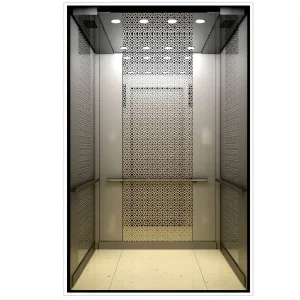
Explore our highly reliable elevator controllers, heavy-duty cargo systems, and premium luxury cabins designed under global EN-81 safety parameters.
Analyzing vertical transportation demands in the era of automated warehousing, smart manufacturing, and globalized e-commerce logistics hubs.
In the contemporary global economy, the rapid expansion of multi-tier distribution networks, multi-story industrial complexes, and deep-storage fulfillment centers has placed unprecedented focus on material handling throughput. Freight elevators (cargo lifts) have evolved from basic vertical platforms into highly complex, automated, and software-integrated nodes within the global supply chain. As supply chain congestion challenges push industrial operations upward, vertical space optimization has become the standard for density and cost efficiency.
Key drivers behind the accelerating global demand for high-capacity freight elevators include:
Urban warehousing requires multi-floor logistics configurations where high-capacity traction elevators transport cargo pallets continuously across shifts. Real-time sorting and processing demand zero lift down-time.
Automated manufacturing environments rely heavily on integration between heavy-duty cargo lifts, automated guided vehicles (AGVs), and smart production systems to coordinate movements across vertical assembly floors.
With industrial land premiums soaring in key economic hubs across Europe, Asia-Pacific, and the Americas, developers are shifting outward and upward. Multi-level manufacturing yards require vertical transportation up to 5,000kg and beyond.
As a prominent China Freight Elevator Manufacturer and Supplier, Ningbo Bluetech designs and manufactures heavy-duty systems that bridge the gap between heavy structural demands and micro-level technological control. This whitepaper provides a technical overview of architectural configurations, global standard compliance, engineering capabilities, and future automation integration.
Comparing drive technologies, structural designs, and international safety certifications.
Selecting the optimal drive system is critical when designing vertical transportation systems for heavy-duty commercial and industrial environments. The decision heavily impacts building structural designs, energy footprints, and long-term operating costs.
Modern engineering relies on two primary drive methods for freight vertical transport, each suited to specific height, speed, and loading demands:
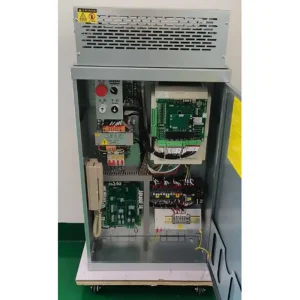
To address the high mechanical stress of transporting heavy goods, Ningbo Bluetech incorporates Intelligent VVVF Control Technology. This system continuously monitors cargo weight distribution, motor speed, and input power phases to optimize operations. Key advantages include:
Every freight lift produced by Ningbo Bluetech conforms to the European standard EN-81 (specifically EN 81-20 and EN 81-50). This guarantees compliance with global construction, installation, and testing guidelines. Safety elements include:
Tailoring cargo hoist systems to regional regulations and distinct industrial operations.
Operating demands for freight elevators vary widely depending on localized regional guidelines, structural regulations, and industry-specific use cases. Our engineering department designs systems to meet these diverse challenges:
Operational Challenges: Extreme ambient temperatures, heavy vibration, dust, and continuous loading of steel coils, machinery, and cast parts.
Engineering Response: Reinforced cabin structures with structural steel support channels, explosion-proof electronic enclosures, IP54 motor ratings, and hard-faced floor platings to withstand high point-loads.
Operational Challenges: Sub-zero environments, chemical washdowns, and strict humidity controls to preserve raw materials and perishables.
Engineering Response: Full SUS304 stainless steel cabin walls and guide tracks, water-resistant door control systems, and insulated electronic enclosures designed to prevent condensation.
Operational Challenges: Large payloads with wide dimensions, requiring precise level transitions to prevent car bumper and undercarriage damage.
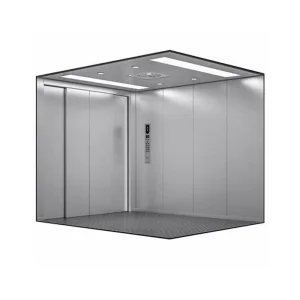
Engineering Response: Extra-wide cabins (up to 6000mm) fitted with dual-side cop control panels, variable speed heavy-duty door operators, and floor leveling systems calibrated for heavy rolling wheel loads.
For architectural integration, our engineering team works directly with clients to coordinate vertical shaft designs, concrete pit depths, structural wall tie spacings, and overhead headroom requirements. Ensuring precise planning before hoistway excavation avoids costly structural modifications later on.
Established by a group of industry specialists in 2006, NINGBO BLUETECH is dedicated to the design, manufacture, and global export of high-performance elevators and escalators. Backed by nearly 20 years of professional industry experience, we have built a reputation for excellent build quality, reliable performance, and dedicated engineering support.
Our comprehensive vertical transportation solutions cover: home elevators, passenger elevators, sightseeing elevators, freight elevators, and dumbwaiters. Every product in our catalog is engineered and manufactured to meet the latest EN-81 standards. By blending user-centric design with robust construction, BLUETECH brand products deliver exceptional value and reliable performance across global markets.
We serve international markets with strong commercial ties, exporting to more than 30 countries, including Singapore, Thailand, Saudi Arabia, the UAE, Germany, Egypt, Ethiopia, Nigeria, and beyond.
Our long-term partners include leading international elevator companies, such as Mitsubishi Middle East and ThyssenKrupp Africa. We collaborate on new lift installations, modernization programs, and major maintenance projects worldwide.
When you choose NINGBO BLUETECH, you work with a team of dedicated experts focused on high-performance vertical transportation. Our track record of successful installations and satisfied global clients reflects our core commitment to safety, innovation, and long-term reliability.
From design to final inspection, our team works closely with project developers, architects, and facilities managers to ensure every installation meets structural, safety, and operational specifications.
Combining advanced hardware, customer service, and manufacturing processes to deliver long-term value.
With years of professional design experience, our engineering team specializes in custom layouts for challenging hoistway dimensions and unique structural environments.
We prioritize prompt communication. Our technical support team guarantees comprehensive solutions or layout proposals within 12 hours, for both pre-sales and post-sales inquiries.
Through long-term supplier relationships and efficient procurement management, we offer high-performance products at highly competitive price points.
Our standard manufacturing run is completed within 3 weeks. For time-sensitive projects, we can fast-track production to 2 weeks to meet tight development timelines.
Smart, sustainable, and automated: The future of heavy-duty vertical transport systems.
The industrial landscape is transforming rapidly through digital systems and automation. Our research and development roadmap focuses on integrating freight elevators with modern building automation and industrial ecosystems:
Modern distribution centers utilize Automated Guided Vehicles (AGVs) and Autonomous Mobile Robots (AMRs). Future freight lifts will connect to warehouse management software (WMS) via API/IoT interfaces, enabling robots to navigate vertical levels automatically without human input.
Equipped with specialized sensors, our upcoming systems monitor motor temperatures, guide rail vibrations, door opening cycles, and electrical harmonics. Real-time data processing detects wear early, scheduling maintenance before downtime occurs.
Our modern traction freight systems feature optional energy regeneration drives. When the elevator travels down with a heavy load or up with a light load, excess energy is captured and converted back into electrical power, feeding it back into the facility's grid.
By focusing on sustainable materials, intelligent routing algorithms, and durable structural engineering, Ningbo Bluetech remains at the forefront of heavy industrial transport technology, helping modern operations reduce energy usage and improve warehouse efficiency.
Our collaborative design teams, operating across multiple regional offices, work with clients to turn technical requirements into highly functional, real-world solutions.
Expert answers to key technical questions about purchasing, engineering, and installing industrial cargo elevators.
Freight elevators are typically rated for capacities ranging from 1,350 kg to over 5,000 kg. High-capacity, custom-engineered models can handle upwards of 10,000 kg. The required capacity depends on the weight of the goods and the loading method (e.g., manual hand trucks vs. heavy motorized forklifts).
The EN-81 standard (specifically EN 81-20 and EN 81-50) establishes safety rules for the construction and installation of passenger and goods-passenger lifts. It defines the structural requirements for the hoistway, guide rails, safety gears, and landing doors, protecting workers and facilities from hazards like overspeed, free-fall, and sudden leveling shifts during loading cycles.
Traction elevators run via counterweights and cables, making them ideal for taller buildings, high-traffic demands, and energy efficiency. Hydraulic elevators use a hydraulic piston to lift the cabin, which is highly effective for low-rise buildings and extremely heavy loads, placing less structural stress on the building's walls.
Yes. Modern industrial operations increasingly require freight elevators to interface with Automated Guided Vehicles (AGVs) and Autonomous Mobile Robots (AMRs). This is managed via dedicated software APIs and network interfaces that allow the lift and the robot fleet manager to exchange commands, request floor access, and operate the elevator doors automatically.
Under normal conditions, Ningbo Bluetech completes custom freight elevator manufacturing in 3 weeks. For urgent projects with tight timelines, production can be fast-tracked to 2 weeks, ensuring project milestones are met without sacrificing build quality or safety compliance.
Variable Voltage Variable Frequency (VVVF) drives provide precise control over the lift's speed profile. This ensures smooth acceleration and deceleration, reducing mechanical wear. More importantly, it delivers precise leveling accuracy at landing sills, preventing hazardous height differentials that can cause forklift tips or cargo damage during loading.
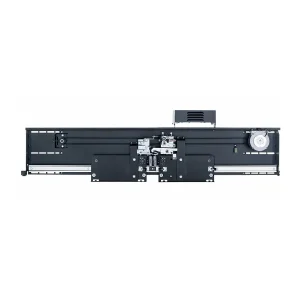
To provide a detailed layout proposal and quote, we require key parameters, including: rated load capacity, travel height, number of stops/openings, concrete hoistway dimensions, pit depth, overhead clearance, and preferred door type (e.g., automatic center-opening or vertical biparting doors).
Yes. For hazardous, chemical, or grain processing facilities, we engineer explosion-proof systems. These feature spark-resistant materials, specialized copper-alloy components, IP65-rated control cabinets, and sealed wiring enclosures to meet strict regional safety regulations for explosive atmospheres.
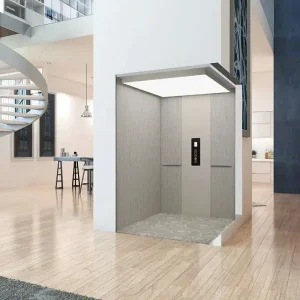
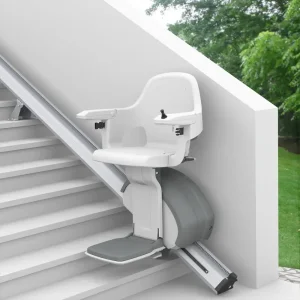
From industrial vertical freight lifts to residential home elevators, we deliver high-quality engineering designed to meet diverse transport requirements.
 Bluetech