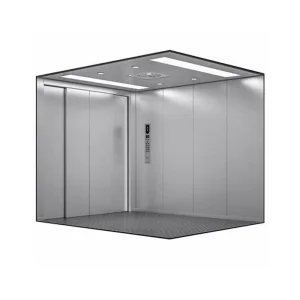
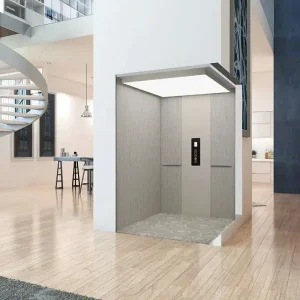
Explore our industrial and commercial product inventory designed for high-density heavy transit, commercial properties, and private villas.
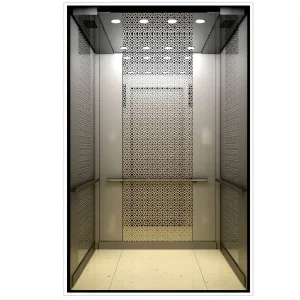
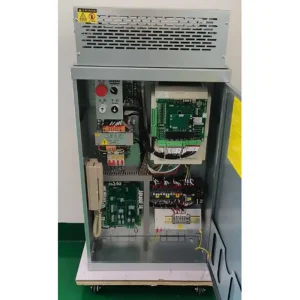
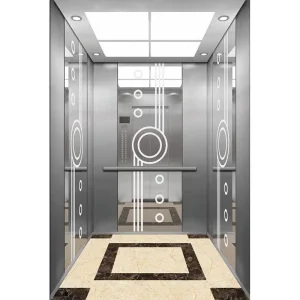
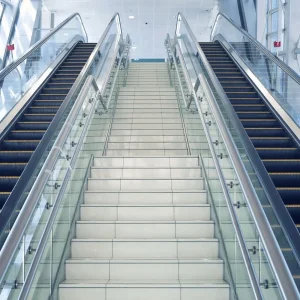
Evaluating macro-market trends and mechanical standards across public transit and commercial systems.
Modern urban infrastructures demand reliable, highly efficient, and safe continuous transport systems. As global cities densify, the role of heavy-duty, commercial, and public transit escalator lifts has expanded beyond simple conveniences to become critical pillars of structural layout design. In commercial facilities, public transit systems, and industrial hubs, escalators manage pedestrian flow dynamically, preventing overcrowding and ensuring continuous throughput.
Unlike standard elevators which operate in batches, escalators offer a continuous flow mechanism, transporting thousands of passengers per hour. As shopping malls, airports, transit hubs, and corporate parks grow, the mechanical demands on step chain tension, drive efficiency, and structural truss fatigue have escalated. Current architectural models place heavy emphasis on energy conservation and safety sensors to align with green building standards (such as LEED) and strict local building regulations.
Analyzing raw material access, precision manufacturing clusters, and cost-to-performance metrics.
Proximity to leading steel production, advanced electronics manufacturing hubs, and specialized motor foundries enables rapid component assembly with minimal logistic delays.
By manufacturing for both high-capacity local infrastructure projects and vast global export demands, factories in China minimize material costs per unit, passing those structural savings to customers.
Equipped with sophisticated test towers and high-precision CAD modeling departments, engineering changes and architectural adaptations are processed within weeks rather than months.
China's manufacturing landscape has transitioned from high-volume production to a focus on precision high-technology engineering. Companies leverage automated laser cutting systems, robotic structural welding, and advanced quality assurance checks to maintain tight dimensional tolerances. Consequently, escalators exported from China meet or exceed global building regulations, including EN-81 standards in Europe and ASME A17.1 protocols in North America. This blend of structural strength and cost efficiency has positioned China-based manufacturers as the preferred partners for infrastructure developers worldwide.
Nearly two decades of innovation, safety-first engineering, and verified global reach.
Established by a group of industry specialists in 2006, NINGBO BLUETECH is dedicated to manufacturing high-performance elevators and escalators, backed by nearly 20 years of professional industry experience. Through continuous research and development, NINGBO BLUETECH has built a reputation for product reliability, safety, and proactive customer service.
Our complete solutions span a wide product spectrum: home elevators, high-speed passenger lifts, panoramic sightseeing elevators, heavy freight elevators, dumbwaiters, and state-of-the-art escalator lifts. All products are designed, built, and tested under the latest EN-81 standard, ensuring high quality and complete structural safety. By maintaining a human-centered design approach alongside competitive pricing, BLUETECH brand products have gained strong traction internationally.
In addition to our strong local presence, we have successfully exported our products to over 30 countries and regions worldwide, including Singapore, Thailand, Saudi Arabia, the UAE, Germany, Egypt, Ethiopia, and Nigeria.
Working alongside global industry giants to deliver reliable architectural installations.
Collaborative engineering is at the heart of our international operations. Our strategic partners include premier global escalator and elevator enterprises, such as Mitsubishi Middle East and ThyssenKrupp Africa. Working alongside these companies, we cooperate closely on new lift designs, large-scale escalators, building modernization projects, and maintenance support.
When you partner with NINGBO BLUETECH, you gain access to an experienced team of elevator and escalator engineers dedicated to delivering reliable, safe products. Our project portfolio and track record reflect our dedication to innovation, build quality, and customer satisfaction.
Combining technological innovation with optimized manufacturing timelines and robust after-sales support.
Our experienced engineering team creates custom architectural designs, matching non-standard hoistway spaces, unique inclinations, and specialized outdoor layouts.
We respect your project timelines and guarantee a technical response or quote within 12 hours, ensuring clear communication across all design and purchasing phases.
Through close supply chain integration and direct material purchasing, BLUETECH delivers cost-effective equipment without compromising on engineering quality.
Standard order manufacturing is completed in 3 weeks, with expedited 2-week lead times available for urgent infrastructure repair or replacement projects.
A technical breakdown of safety systems, energy regeneration, and structural engineering.
Modern escalator engineering prioritizes active passenger protection, mechanical reliability, and environmental sustainability. At NINGBO BLUETECH, we integrate advanced electronic control systems and premium materials to ensure safety and long-term durability in high-demand settings.
Our escalator lifts utilize intelligent micro-computer frequency control. When passenger flow drops, sensors signal the VVVF control system to smoothly transition the escalator into energy-saving standby mode. This features reduces energy consumption by up to 30%, curtails motor mechanical wear, and extends the service life of step chains and gears.
Our safety compliance matches strict global EN-81-20 and EN-115 parameters. The safety sensor suite includes:
Our trusses are constructed from high-grade structural profile steel, treated with anti-corrosion coatings to protect against rust in outdoor transit projects. Using finite element analysis (FEA) software, our engineering team monitors deflection stress, ensuring structural rigidity is maintained even under continuous passenger loading.
Key specifications, customization factors, and ordering criteria for technical buyers.
Selecting the right escalator requires evaluating structural dimensions, structural capacity, and operating environment. Technical procurement teams should focus on these primary criteria:
Typically, commercial escalators use either a 30-degree or 35-degree angle. A 35-degree incline requires a smaller footprint, making it ideal for department stores, retail shops, and commercial offices. A 30-degree incline provides greater passenger comfort and is the standard choice for higher travel heights and public transit applications.
Step width dictates passenger flow capability. Standard sizes include:
Outdoor escalator systems require complete environmental protection. This includes weatherproofing (IP54 or IP65 electrical enclosures), rust protection, oil-water separators, auto-lubricators, and specialized truss heating systems for colder climates.
Direct technical answers to help purchasing managers, architects, and installation engineers.
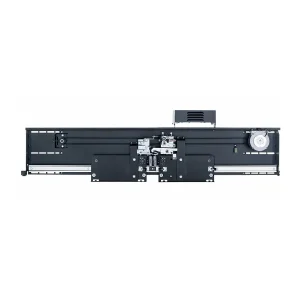
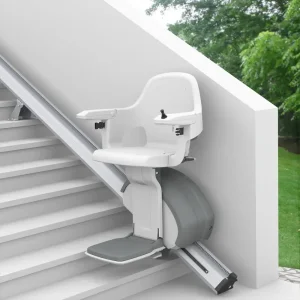
Explore our selection of commercial escalator lifts, specialized residential passenger elevators, and components.
 Bluetech