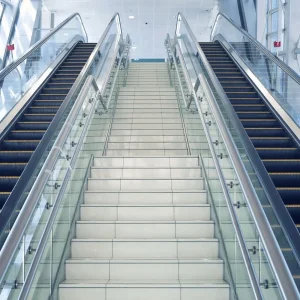
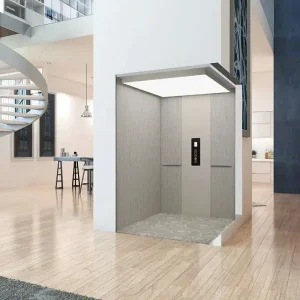
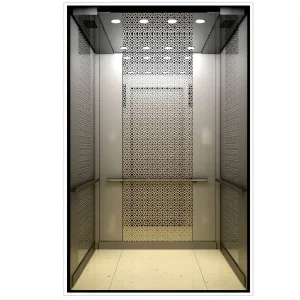
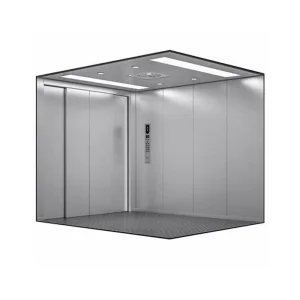
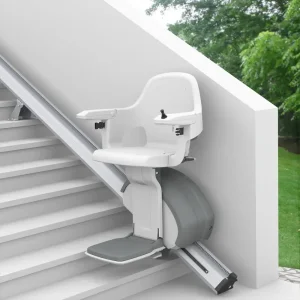
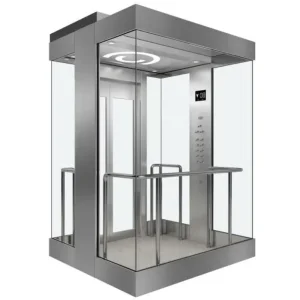
Explore our highly integrated core products, including smart villa lifts, industrial freight elevators, escalators, and key micro-computer elevator controllers.
In modern architecture and optimized manufacturing settings, vertical logistics require micro-freight systems that guarantee speed, isolation, safety, and energy efficiency. Dumbwaiter lifts—specifically engineered micro-elevators with payload capacities ranging from 50kg to 500kg—have evolved from manual pulleys to automated, microprocessor-controlled components of the global logistics and hospitality chain.
As standard-setting manufacturers based in China, we leverage comprehensive supply chains, robust precision manufacturing, and compliant design standards to deliver reliable vertical transportation globally. In this whitepaper, we dissect the design philosophies, structural mechanics, localized architectural integration, and future technological roadmaps of modern dumbwaiters.
Analyzing key structural demand, regulatory differences, and purchasing requirements across major continental zones.
The global demand for commercial and residential dumbwaiters is witnessing a major transformation driven by urbanization, strict healthcare standards, and labor optimization. In North America and Europe, stringent hygienic codes in hospitals and food services have made dumbwaiters mandatory for clean transport of surgical tools and food products. In fast-developing regions like Asia-Pacific and the Middle East, high-density residential towers and luxury commercial offices are driving the need for micro-logistics devices to bypass manual freight transit.
Demands strict compliance with ASME A17.1 / CSA B44 standards. Emphasizes heavy material finishes, food-grade SUS304 or SUS316 stainless steel, and UL-certified micro-computer controllers.
Must comply with EN 81-3 (Safety Rules for Service Lifts). The market requires high-efficiency motors with energy consumption limits, integrated interlocking systems, and eco-friendly cabins.
Driven by smart city developments and mega-structures. Features high speed configurations, custom finishes matching luxury interiors, and integration with modern building management systems (BMS).
Founded in 2006, Ningbo Bluetech Import & Export Co., Ltd. has grown to become an authoritative designer, manufacturer, and exporter of elevator and escalator systems. With nearly 20 years of professional industry experience, Bluetech products cover passenger elevators, sightseeing lifts, high-capacity cargo lifts, and advanced service dumbwaiters.
All products are engineered and tested in accordance with the latest international EN-81 standards. Driven by humanized design, high safety priorities, and competitive global pricing, we have exported to over 30 countries and regions including Germany, Saudi Arabia, the UAE, Singapore, Thailand, Egypt, Ethiopia, and Nigeria.
Our commitment to design flexibility allows us to cooperate closely with international giants like Mitsubishi Middle East and ThyssenKrupp Africa. Whether building new installations, conducting modernization retrofits, or supplying spare parts, our 12-hour customer response window ensures seamless project delivery.
Working side-by-side with global industry leaders in new installations and modernizations:
From advanced VVVF drive systems to hygiene-optimized stainless-steel structures.
The modern dumbwaiter is a highly engineered mechanical system optimized for safety and space utilization. Depending on the building layout, these systems use either traction-based drive networks or compact hydraulic configurations. We focus heavily on minimizing structural footprint while maximizing hoistway volume. Below is the technical roadmap illustrating the integration of core control and safety technologies.
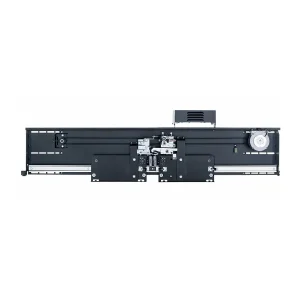
Our dumbwaiter systems utilize advanced VVVF motor control. This ensures smooth acceleration and deceleration, preventing liquid spillage or dish tipping during commercial restaurant operation. Additionally, energy savings of up to 40% are achieved compared to conventional single-speed drive mechanisms.
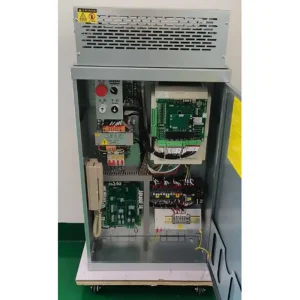
Utilizing high-performance logic processors, our controllers support multi-call registrations, real-time speed monitoring, and floor indicator readouts. Built-in self-diagnostic systems display fault codes instantly, reducing maintenance downtime by over 60%.
Safety is critical. Our lifts incorporate electromagnetic landing door interlocks, ensuring that landing doors cannot open unless the cabin is present at that floor level. Additionally, instantaneous safety gears trip automatically if abnormal cable slack is detected.
Aligned with Industry 4.0 trends, modern configurations export operational telemetry directly to building management networks. This supports predictive maintenance routines, alerting building managers to component fatigue before any failure occurs.
Engineered for high-frequency use across diverse industrial and service sectors.
| Application Scenario | Common Payloads | Door Types Required | Material Focus | Key Operational Requirements |
|---|---|---|---|---|
| Hotels & Commercial Kitchens | 50kg - 100kg | Vertical Bi-Parting / Rolldown | Food-Grade SUS304 Stainless Steel | Hygiene compliance, heat insulation, spill resistance, and high-speed operation. |
| Hospitals & Medical Laboratories | 100kg - 250kg | Vertical Bi-Parting | AISI 316 Acid-Resistant Stainless Steel | Sanitary clean-zones, quiet magnetic breaks, and touchless control interfaces. |
| Libraries & Public Archives | 50kg - 100kg | Hinged Swing Doors | Anti-Static Coated Plate / SUS304 | Dust-free environments, ultra-smooth movement, and quiet acceleration/deceleration. |
| Warehouses & Factories | 200kg - 500kg | Industrial Bi-Parting / Shutters | Reinforced Galvanized Steel / SUS304 | Heavy shock absorption during loading, collision protection, and durable components. |
| Modern Villa Residences | 100kg - 150kg | Hinged Flush Glass Doors | Custom Decorative Laminate / Brass | Low noise levels, customizable finishes matching residential decor, and compact shafts. |
Selecting the proper configuration depends heavily on traffic flow patterns and the structural conditions of the shaft. For restaurants, a counter-height (serving height) setup is standard, facilitating seamless slide-in tray loading. In industrial or warehouse spaces, a floor-level setup allows staff to wheel small hand trucks or carts directly into the cabin without manual lifting, maximizing warehouse safety and speed.
A structured approach to evaluating Dumbwaiter suppliers and ensuring long-term product viability.
Buyers must determine whether they require a self-supporting steel structure or if a concrete shaft will be constructed. Self-supporting frame models simplify installation, eliminating civil construction overheads.
Traction dumbwaiters can have the machine room positioned at the top or bottom of the shaftway (Machine-Room-Less / MRL options). Selecting the machine position affects maintenance access and building load distribution.
Ensure options like automatic rescue devices (ARD) are integrated. These bring the cabin safely to the nearest landing and open the door during power cuts, preventing trapped items or thermal loss.
Get answers to common queries regarding standards, custom specifications, installation processes, and maintenance.
Explore our complete product catalog, designed for residential, commercial, and heavy-duty industrial environments.
 Bluetech