Engineered for safety, designed for modern commercial architecture, and certified to meet international EN-81 standard directives.
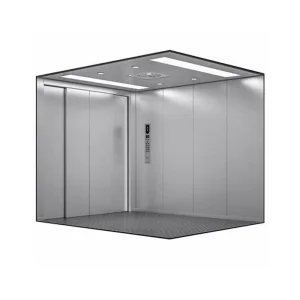
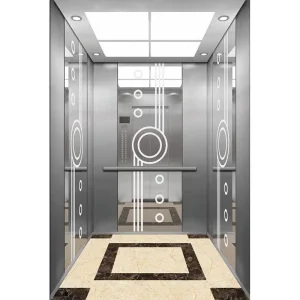
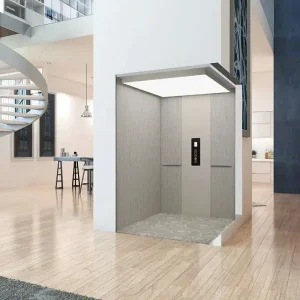
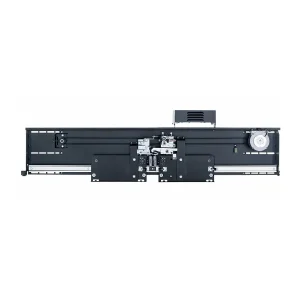
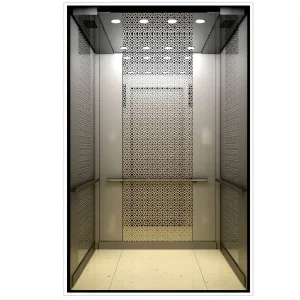
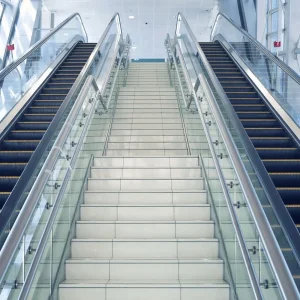
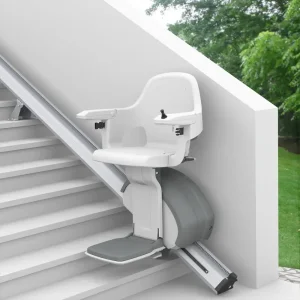
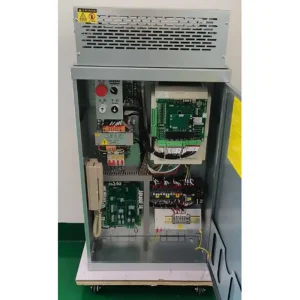
Modern architectural paradigms prioritize visual connectivity, spatial openness, and natural light optimization. The design integration of commercial glass elevators (often referred to as panoramic or scenic lifts) has transformed from a luxurious novelty to an essential structural component in Grade-A offices, retail complexes, transport hubs, and high-end residential towers.
As a leading Chinese manufacturer, Ningbo Bluetech Import & Export Co., Ltd. has stood at the forefront of this industrial transition. The integration of high-grade architectural glass with structural hoisting and smart variable voltage variable frequency (VVVF) controllers enables developers to add literal and visual value to real estate projects.
"A scenic glass elevator is not merely transport equipment; it is an architectural focal point that activates vertical space and shapes the structural narrative of a building."
By blending advanced metallurgy, structural glass safety mechanics, and intelligent traction design, contemporary commercial glass elevators deliver high-speed transit without compromising the aesthetic layout of open-atrium architectures.
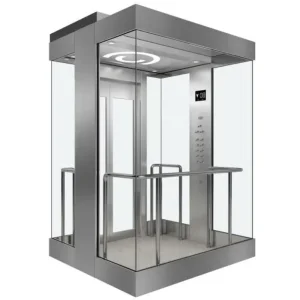
The safety of a glass elevator lies in the materials science of its structural walls. For commercial applications, passenger safety is guaranteed through the utilization of heavy-duty laminated safety glass, specifically designed to meet or exceed EN 81-20/50 safety regulations.
We utilize double-layered tempered glass laminated with Polyvinyl Butyral (PVB) or SentryGlas Plus (SGP) interlayers. SGP provides 5 times the tear strength and 100 times the rigidity of standard PVB, maintaining structural integrity even under extreme impact conditions.
Our gearless Permanent Magnet (PM) synchronous machines reduce energy consumption by up to 40% compared to traditional gear systems. They require no lubrication oils, eliminating fire hazards and simplifying long-term commercial maintenance.
Variable Voltage Variable Frequency (VVVF) regulation allows for smooth acceleration and deceleration curves, reducing cabin vibration to < 0.15m/s² and keeping operating noise levels below 50dB(A).
Depending on the building layout—whether internal atrium or external facade—environmental factors play a massive role. External panoramic elevator shafts require strict considerations for thermal load, ultraviolet (UV) filtration, and mechanical deflection limits. At Ningbo Bluetech, we offer specialized multi-layered insulated glass units (IGUs) that prevent the greenhouse effect inside the elevator car, ensuring comfortable interior temperatures while reducing the building's overall HVAC load.
Ningbo Bluetech operates across a sprawling network, serving developers, general contractors, and elevator engineering agencies globally. By partnering with leading global names like ThyssenKrupp Africa and Mitsubishi Middle East, we have proven our competence in executing complex modernization, design-build, and maintenance projects under diverse regulatory conditions.
For installations in the European Union, Middle East, and North America, elevator systems must satisfy various safety standards. Our manufacturing lines run strictly under ISO 9001 and ISO 14001, producing systems compliant with EN-81 (Europe), ASME A17.1 (Americas), and local building codes in destination countries like Singapore, Thailand, Saudi Arabia, Germany, and Egypt.
To assure localized support, we supply complete technical drawing sets, structural load calculation formulas, and electrical schematics. This documentation speeds up local authority inspections and simplifies the installation workflow for local technicians.
Vertical transportation project schedules are notoriously tight. A delay in the elevator shaft installation can halt an entire project's interior finish phases. NINGBO BLUETECH addresses this critical bottleneck by optimizing our production cycles: standard orders are completed within 3 weeks, and urgent custom orders can be fast-tracked to 2 weeks.
Our strategic logistics setup in Ningbo, one of China's premier deepwater port cities, facilitates direct maritime transport, drastically reducing shipping transshipment times and reducing potential container damage.
A key element of SEO information gain is assessing how different building types use architectural glass elevators differently. Here, we outline the structural and operational solutions required for various installation environments:
In high-density retail spaces, panoramic elevators serve as both transport and advertising. By giving passengers a full view of the retail storefronts as they travel vertically, these glass lifts encourage consumer exploration. Our solutions utilize heavy-duty doors with high-frequency opening cycles, coupled with door protection systems like light curtains that prevent accidental passenger entrapment.
For office towers, efficiency and aesthetics must merge. We deploy high-speed gearless glass elevators coupled with Destination Control Systems (DCS). Rather than calling a lift inside the cabin, passengers select their destination on a lobby touchscreen, and an AI algorithm routes them to the elevator car that will get them to their floor fastest. This decreases waiting times by up to 30% during morning and lunch rush hours.
Residential panoramic elevators emphasize quiet operation, space efficiency, and customized interior designs. Utilizing a Machine Roomless (MRL) design, we can eliminate the top-floor machine room completely, allowing the glass elevator to terminate flush with the roofline or top ceiling level, preserving valuable residential square footage.
The next decade of vertical transit is being shaped by digitization, environmental sustainability, and predictive mechanical maintenance. At Ningbo Bluetech, our R&D roadmap focuses on three main technological pillars:
By incorporating smart vibration, heat, and door-cycle sensors on the elevator car and motor, our system transmits telemetry to cloud databases. AI models analyze this data to predict component failure weeks before it happens, drastically reducing building downtime.
When an elevator travels down with a heavy load or travels up empty, the PM motor acts as a generator. Our energy regeneration units capture this kinetic energy and convert it to clean electricity, feeding it back into the building's electrical grid.
We are experimenting with electrochromic smart glass that can change transparency dynamically depending on external sunlight levels or user preference, offering privacy or heat shielding at the push of a button.
Clear answers to engineering, structural design, safety regulations, and maintenance questions.
Commercial panoramic lifts require tempered laminated safety glass, usually configured as 6mm + 1.14mm PVB/SGP + 6mm, or thicker configurations depending on structural load tests. Under EN 81-20/50 standards, these glass panels must withstand a static force of 300N applied over a small area without suffering permanent deflection or cracking.
MRL layouts position the permanent magnet traction machine and governor directly within the elevator shaft rather than in a dedicated room above the shaft. This allows building designers to keep roof lines clean, cut structural load requirements on upper concrete slabs, and save rentable space on top floors.
With correct maintenance, a high-quality glass elevator has a design lifespan of 20 to 25 years. Routine maintenance checks should occur monthly or quarterly depending on utilization frequency, focusing on door alignments, guide shoe wear, sensor calibrations, and steel rope tension checks.
We pack all elevator components—cabin walls, structural frames, and controller boards—in IPPC-certified, heavy-duty wooden crates designed for maritime shipping. Once the shipment arrives at the destination, local partner engineers handle the mechanical installation, while we supply remote digital support and direct technical consultations.
Direct sourcing channels for global general contractors, mechanical engineers, and estate managers.
 Bluetech