Explore our high-performance vertical transportation systems built to comply with strict global safety protocols and structural integrity requirements.
An Analysis of Space Optimization, Engineering Breakthroughs, and Global Supply Chain Dynamics.
In modern urban planning and high-end residential architecture, physical space is the ultimate luxury. Traditional residential elevators have long posed critical engineering and spatial challenges for builders, specifically the requirements of a deep excavation pit (typically 300mm to 1500mm) and high overhead clearance requirements. As real estate development moves toward high-density residences, historical retrofits, and strict structural protection of foundations, the global market is witnessing a massive pivot towards Pitless Residential Elevators.
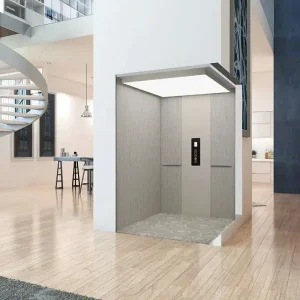
A pitless residential elevator is engineered to operate efficiently without requiring excavation below the lowest finished floor level. By integrating self-supporting shafts, low-profile guide rail systems, and innovative drive mechanisms (such as gearless traction, vacuum pneumatics, or space-saving screw drives), these systems bypass structural limitations, offering key compliance safety margins and rapid installations.
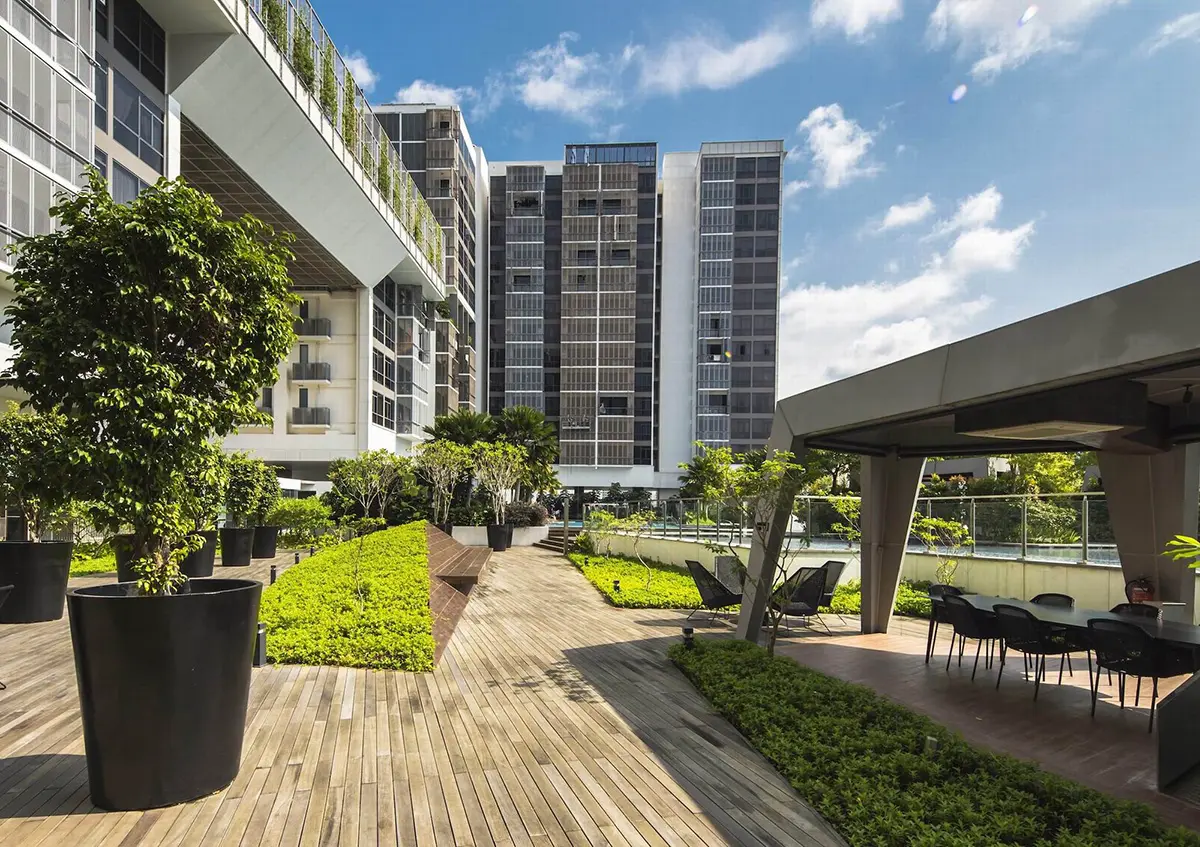
Several megatrends are driving the rapid adoption of pitless elevator technology across major international markets:
For international procurement managers, real estate developers, and local installers, selecting a pitless elevator factory requires rigorous alignment with global technical directives. Standardized verification ensures reliability, ease of permitting, and legal liability protection:
Compliance with EN 81-41 (Safety rules for the construction and installation of lifts for persons with impaired mobility) is mandatory. It ensures safety buffers, emergency lighting, and redundant mechanical interlocks in pitless environments.
In the US and Canada, pitless residential elevators must meet Section 5.3 for Private Residence Elevators. Special variances or specific structural approvals are checked to ensure mechanical limit switches stop carriage movement safely without floor pits.
For installations in active fault lines (e.g., California, Japan, parts of Italy), shafts must be constructed with reinforced structural alloy frames to withstand lateral acceleration forces and guarantee passenger cabin stabilization during seismic events.
How Ningbo Bluetech leverages regional clustering, advanced industrial automation, and modern logistics to achieve rapid lead times and superior cost efficiencies.
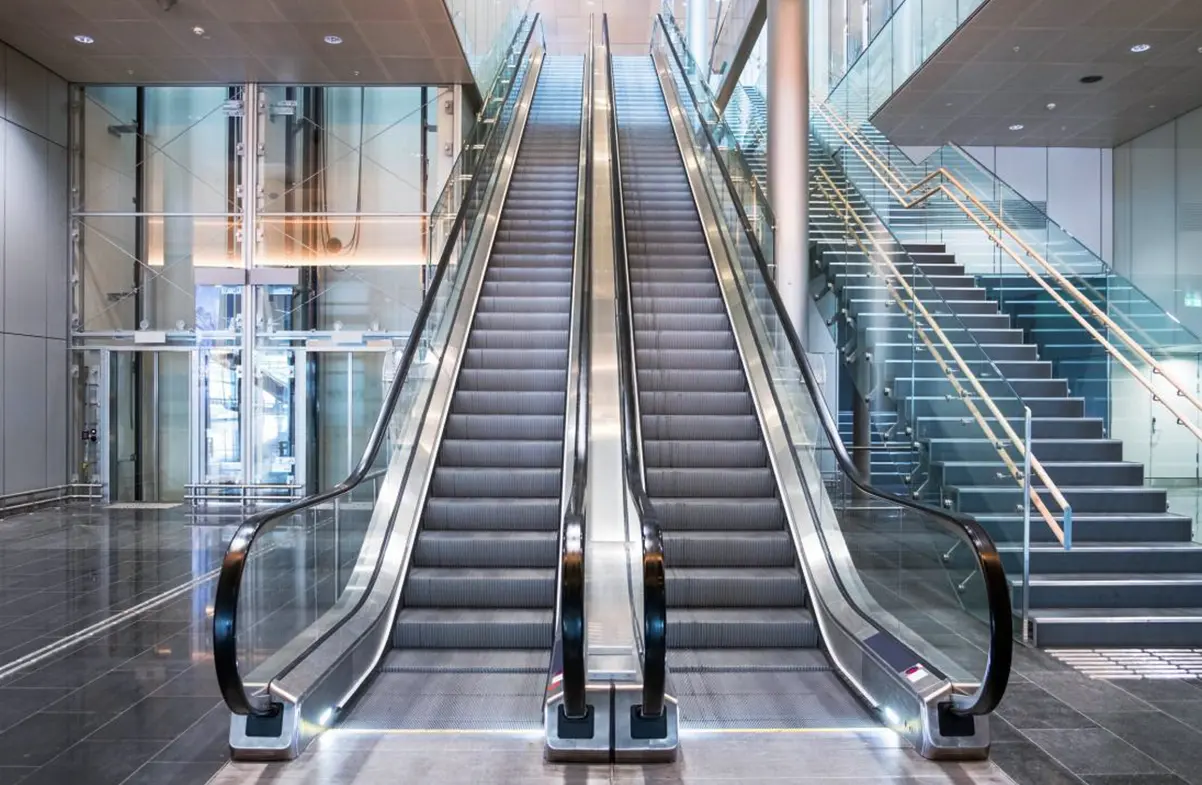
Ningbo, China, is one of the world's most advanced manufacturing hubs for elevator components. By locating manufacturing within this geographic cluster, Ningbo Bluetech Import & Export Co., Ltd. utilizes an integrated ecosystem of precision steel mills, microcomputer control board developers, and specialized traction motor manufacturers.
This proximity dramatically reduces the internal logistics lead time. Standard custom elevators are fabricated, programmed, tested, and pre-assembled within 3 weeks, and in urgent project cases, within just 2 weeks. Compared to traditional Western manufacturers requiring 12 to 24 weeks, this represents an extraordinary efficiency gain for real estate project developers globally.
Established in 2006 by a dedicated consortium of mechanical engineers and industry experts, NINGBO BLUETECH has delivered premium vertical transportation solutions for nearly two decades. The brand specializes in the design, engineering, testing, and distribution of residential lifts, high-capacity passenger elevators, cargo lifts, escalators, and structural cabin modernizations.
All products are engineered under the rigorous guidance of European EN-81 and EN-81-41 standards. The brand's international footprint covers over 30 countries and regions including Singapore, Thailand, Saudi Arabia, the UAE, Germany, Egypt, Ethiopia, and Nigeria. Bluetech operates as a trusted manufacturing partner to major global brands, contributing key OEM production and customization services for projects managed by industry leaders such as Mitsubishi Middle East and ThyssenKrupp Africa.
To ensure high standards of quality and passenger safety, Ningbo Bluetech integrates several state-of-the-art technological features into its pitless elevator lines:
Real-world integration of pitless elevator designs across varying residential architectural environments.
Challenge: Adding vertical transit to a 100-year-old masonry estate with protected historic foundations where excavation is prohibited.
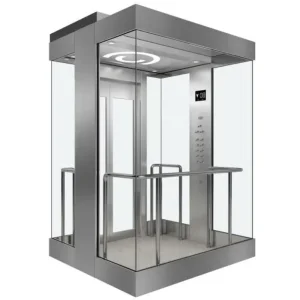
Solution: A pitless traction elevator featuring a self-supporting glass shaft. The shaft anchors directly to the existing structural floor slabs, avoiding the need for deep excavation and preserving the building's historical integrity.
Challenge: Retrofitting mobility systems into upper-floor penthouse units where structural modifications to the concrete floor slabs are not possible.
Solution: Ultra-thin pitless home lifts require only a 50mm ramp or a shallow 50mm depression, which can be constructed within standard screed levels without cutting structural post-tensioned slabs.
Challenge: Providing high-reliability wheelchair access across multi-story community villas, requiring compliance with EN 81-70 access directives.
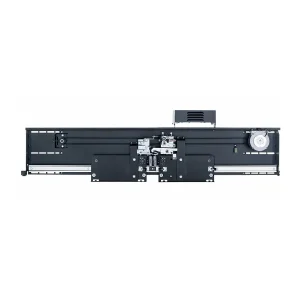
Solution: Pitless residential elevators configured with wider automated sliding doors, handrails, voice synthesizers, and touch buttons with Braille labeling.
In addition to private residences, Ningbo Bluetech collaborates with international design offices on various development projects, adapting products to complex local building codes. Whether installing new lift complexes, modernizing older platforms, or coordinating maintenance systems for properties like the ACE Hotel, Bluetech's engineering team provides detailed CAD layout drafts and electrical schematics within 12 hours of receiving site dimensions.
Professional insight on design considerations, safety standards, installation requirements, and global procurement logistics.
Pitless residential elevators employ specialized drive configurations. Instead of placing mechanical buffers and tension pulleys beneath the cabin floor, these components are relocated to the side or structural frame of the hoistway. Access is achieved using a very small entry ramp (approx. 30mm - 50mm) or a minor flooring recess, allowing the cabin floor to align flush with the bottom landing without structural excavation.
Yes. Pitless elevators manufactured under EN 81-41 or ASME A17.1 codes incorporate redundant safety mechanisms. These include electronic overspeed governors, safety gear brakes, emergency drop-protection switches, continuous light curtain sensors across cabin doors, and an Automatic Rescue Device (ARD) to safely lower the cabin and open the doors during power failures.
Ningbo Bluetech provides a standard manufacturing cycle of 3 weeks from engineering drawing approval to product packaging. For projects under tight development deadlines, manufacturing can be expedited to 2 weeks. Transatlantic or regional shipping times vary depending on the destination port, but typically range from 15 to 35 days.
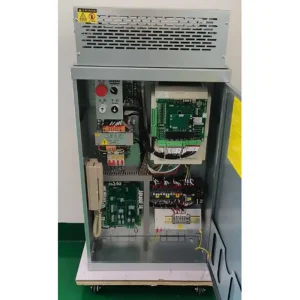
Every component, from the VVVF controller microcomputer boards to the mechanical interlocks and guide rails, is subjected to strict quality control inspections under our ISO 9001 quality management system. Structural frames undergo non-destructive weld testing, and control systems are run through simulated testing protocols prior to shipping to ensure reliable plug-and-play installation on-site.
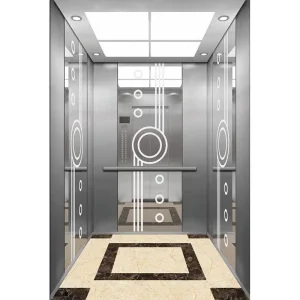
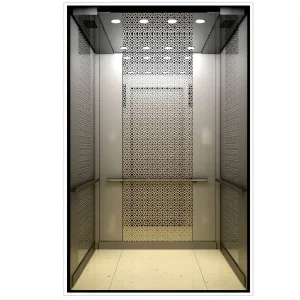
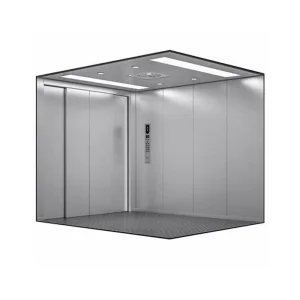
Yes. Customization options cover cabin walls (including mirror stainless steel, hair-line gold, wood laminates, and panoramic glass), floor finishes (natural marble, PVC, or custom tiling), cabin ceiling designs, lighting layouts, and integrated control panels with digital TFT screens.
Select specialized equipment, replacement components, and sub-systems direct from our manufacturing facility in Ningbo.
 Bluetech