Understanding the shift towards decentralized architectural mobility.
The global residential lift market is experiencing a profound paradigm shift. Historically, the installation of a home elevator required extensive architectural modifications—most notably, the excavation of a concrete elevator pit and the construction of a load-bearing, vertical masonry or steel elevator shaft. These requirements not only inflated project costs but also excluded modern residential retrofits, historical townhouse restorations, and luxury apartments from experiencing vertical mobility solutions.
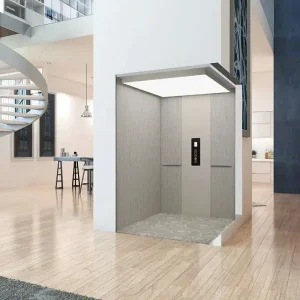
Enter the Shaftless Home Elevator. Engineered to travel directly through a simple ceiling aperture on self-supporting structural guide rails, these systems eliminate the requirement of a dedicated hoistway. This breakthrough design has unlocked massive opportunities across Europe, North America, and the Asia-Pacific region, enabling residential property owners to retroactively install elevators in spaces previously deemed architecturally non-viable.
Industry statistics project the residential shaftless elevator market to expand at a compound annual growth rate (CAGR) of 7.8% over the next decade. Urban densification, aging global populations, and strict building regulations preserving architectural heritage are the primary catalysts.
Decoupling the drive mechanisms and safety architectures driving modern shaftless lifts.
Shaftless home elevators utilize a variety of drive technologies. While conventional elevators rely on heavy hydraulic fluid reservoirs or massive counterweighted overhead traction machines, shaftless setups prioritize compact configurations, structural self-reliance, and safety. Below, we examine the primary tech routes utilized in today's smart residential developments.
| Drive System | Space Efficiency | Structural Load Requirement | Acoustic Footprint | Energy Recovery | Compliance Target |
|---|---|---|---|---|---|
| Smart MRL Traction | Excellent (Self-contained) | Minimal (Floor-mounted rails) | Extremely Low (<45dB) | High (Regenerative braking) | EN 81-41 / ASME A17.1 |
| Screw & Nut Drive | High | Moderate (Wall-mount load) | Low (<50dB) | None | EN 81-41 |
| Pneumatic Vacuum | Excellent (Circular footprint) | Minimal (Floor load only) | Medium (Air blower noise) | Minimal | ASME A17.7 |
| Compact Hydraulic | Moderate (Requires external pump) | High (Pit / Wall load) | Medium | None | EN 81-20 |
As a premier China Shaftless Home Elevators Manufacturer & Supplier, Ningbo Bluetech designs custom machinery configurations. By engineering around the MRL (Machine Room-Less) traction standard, we ensure that energy-efficient permanent magnet synchronous motors (PMSM) drive the lift quietly. This removes the risk of toxic hydraulic fluid leaks within a residential home while preserving the structural slab's integrity.
A legacy of engineering excellence in global vertical mobility.
Established by a group of industry specialists in 2006, NINGBO BLUETECH has dedicated nearly 20 years to the research, development, and global supply of premium elevators and escalators. With decades of developing and researching, NINGBO BLUETECH has become globally recognized for its excellent quality, responsive customization, and unmatched field reliability.
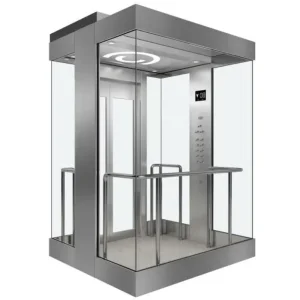
Our comprehensive engineering solutions cover residential home elevators, passenger lifts, panoramic sightseeing elevators, high-load freight elevators, and clean-room dumbwaiters. All of our products are strictly designed, manufactured, and quality-tested under the latest EN-81 standards to ensure complete certification compliance globally.
By integrating humanized design methodologies with advanced safety control boards, Bluetech brand systems deliver exceptional quality at an optimization cost structure. We serve local developer markets and have successfully exported customized lifts to over 30 countries, including Germany, Singapore, Thailand, Saudi Arabia, UAE, Egypt, Ethiopia, and Nigeria.
Deep technical collaboration with Tier-1 global elevator entities.
True authority in the vertical transportation sector is earned through structural testing and real-world execution. Our partners include many international elevator companies, such as Mitsubishi Middle East and ThyssenKrupp Africa. We collaborate on new lifts, large-scale modernization schemes, and complex maintenance projects globally.
When you choose NINGBO BLUETECH for your elevator and escalator needs, you gain the expertise of dedicated engineers who prioritize the longevity and safety of the installation. Our track record of excellence and our long list of satisfied clients speak to our commitment to quality, innovation, and customer satisfaction.
In summary, NINGBO BLUETECH is the go-to manufacturer for elevators and escalators. With nearly two decades of industry experience, a focus on quality, safety, and customer satisfaction, and a dedication to innovation and sustainability, you can trust us to provide the perfect vertical transportation solution for your specific project.
Applying advanced technologies to deliver high reliability, safety, and structural design freedom.
Years of professional design experience enable us to provide structural solutions in complex situations, including low overhead space and restricted floor footprints.
We respect both existing partners and potential customers, guaranteeing comprehensive custom design solutions and quotes within 12 hours, pre- and post-sale.
By leveraging long-term supplier relationships and our optimized domestic component supply chain, Bluetech provides premium performance at competitive prices.
Standard products are manufactured and dispatched within 3 weeks. Urgent project configurations can be accommodated in 2 weeks to meet tight construction timelines.
We apply smart systems into our products, such as intelligent VVVF control, automatic emergency rescue (ARD), and regenerative energy-saving devices.
Our engineering team collaborates directly with architectural firms, builders, and developers to ensure smooth installation in both new builds and retrofits.
How shaftless elevators adapt to diverse global regulatory and architectural frameworks.
The global demand for shaftless elevators is segmented by distinct local needs. In **Western Europe** (specifically Germany, the UK, and France), historical conservation laws protect the structural integrity of residential townhouses. Traditional elevator construction is often banned because excavating a pit can damage centuries-old foundations. A shaftless, self-supporting traction lift offers a solution, requiring only a simple floor aperture without altering load-bearing walls.
In **North America**, the focus is on "aging-in-place." Multi-story colonial and suburban homes require retrofit solutions to help senior residents stay in their homes safely. Shaftless lifts fit neatly into closets, stairwells, or corner spaces, offering a cost-effective alternative to dedicated masonry shafts.
In the **Asia-Pacific and Middle East** regions, luxury and spatial optimization drive the market. High-density residential spaces require compact vertical transportation that integrates seamlessly with clean interior design.
Modern shaftless elevator platforms are shifting toward IoT-enabled diagnostic boards. Real-time monitoring tracks cycle counts, guide rail alignment, and motor temperatures, allowing maintenance teams to address issues proactively and ensure uninterrupted residential service.
Providing clear, expert answers to common questions about residential shaftless lifts.
 Bluetech