Why Is a Freight Elevator Essential for Warehouses?

Time:2026-10-02 Author:Charlotte
0%

A warehouse can look efficient from the loading dock, yet hidden delays often begin between floors. Pallets wait beside ramps. Workers push heavy carts through narrow aisles. Repeated lifting also increases fatigue and handling risks. A properly selected Freight Elevator creates a controlled vertical route for inventory, equipment, and maintenance supplies.

Lee Gray, an elevator historian and author of From Ascending Rooms to Express Elevators, once wrote, “The elevator changed the way buildings were used.” His observation remains relevant in modern logistics. A warehouse Freight Elevator does more than move boxes upward. It connects receiving areas, storage levels, production zones, and dispatch points with predictable timing. Capacity, door size, travel speed, floor loading, and traffic frequency all require careful evaluation. A 5,000-pound elevator may suit boxed goods, but it may struggle with dense machinery or oversized pallets.

The benefits are practical. Staff can reduce unnecessary stair movement. Forklift routes can become shorter. Inventory transfers may become easier to schedule. Safety improves when workers are not asked to carry loads beyond reasonable limits. However, an elevator is not an automatic solution. Poor layout planning can create queues at the doors. Inadequate maintenance can interrupt operations. Even energy use deserves attention.

The best decision combines site measurements, operator experience, manufacturer guidance, and documented inspections. It also leaves room for honest review. Warehouse needs change. A Freight Elevator that fits today may become restrictive after expansion. That uncomfortable possibility should shape the design from the beginning.
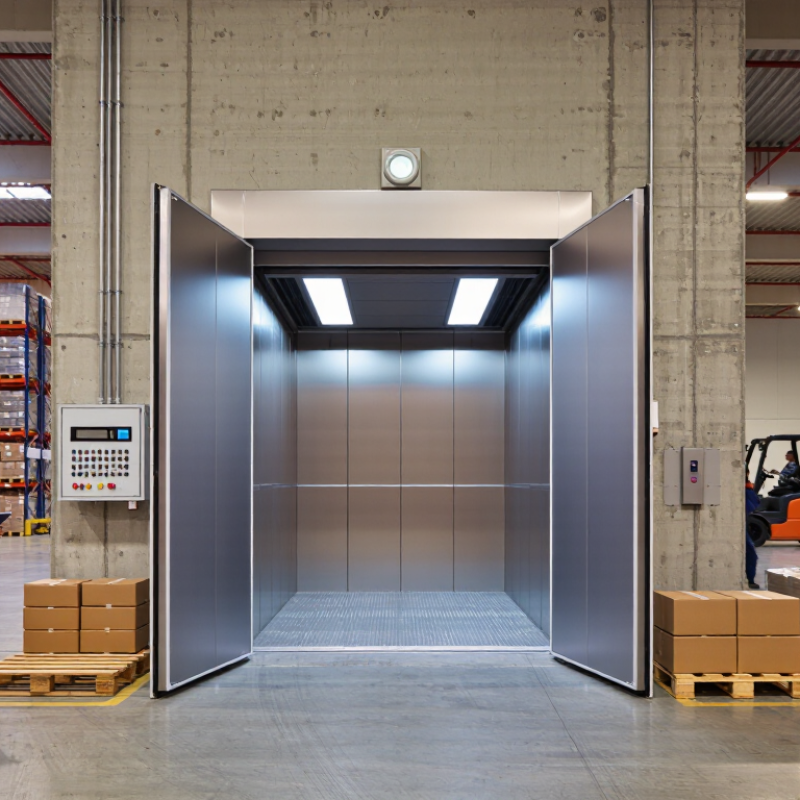
Why Is a Freight Elevator Essential for Warehouses?

What Is a Freight Elevator?

A freight elevator is a powered vertical lift designed to move heavy goods, pallets, carts, and equipment between warehouse levels. It differs from a passenger elevator through its stronger floors, wider doors, protective wall panels, and higher load ratings. Some models use a separate operator, while others allow trained warehouse staff to control loading and travel.

ASME A17.1/CSA B44 provides safety requirements for elevator design, installation, and inspection. However, capacity alone does not determine suitability. A 2,000-kilogram rating may be useless if the pallet cannot enter the doorway. Measure pallet width, cart turning space, travel height, stopping accuracy, and loading frequency. The 2024 Material Handling Industry Annual Report found that 55% of respondents expect supply chain disruptions to become more frequent. A freight elevator can support flexible vertical movement, but it cannot fix poor warehouse planning. That point is easy to underestimate.

Tips: Check the heaviest combined load, including the pallet and cart. Keep door zones clear. Record inspections and unusual vibration. Ask a qualified elevator professional to review the traffic pattern. I would also test peak-hour queues, not only normal shifts. Real operations are messier.

How Freight Elevators Support Warehouse Operations

A freight elevator turns vertical space into usable warehouse capacity. It moves pallets, carts, and heavy equipment between levels without forcing workers onto stairs. That shortens travel routes and keeps receiving, storage, and dispatch areas connected. In a busy facility, seconds matter. A 2024 MHI Annual Industry Report identifies labor availability and productivity as continuing supply chain challenges. Vertical transport can reduce unnecessary manual movement and support steadier workflows.

Modern freight elevators also improve handling control. Operators can move a full pallet to a mezzanine, pause safely, and unload near the required pick zone. Doors, gates, load sensors, and interlocks help separate people from moving equipment. The U.S. Bureau of Labor Statistics continues to report serious injury risks across transportation and material-moving work. Good elevator planning therefore requires trained operators, visible load limits, scheduled inspections, and clear floor markings. Equipment alone does not create safety.

Capacity must match real warehouse behavior. An elevator that carries heavy loads but opens too slowly can become a bottleneck. Peak-hour queues may erase its productivity gains. The 2023 MHI Annual Industry Report notes that many companies are increasing investment in automation, but adoption still requires careful integration. That warning matters. A freight elevator should connect with pallet dimensions, traffic patterns, fire protection, and warehouse management procedures. Small layout mistakes can create large delays. Sometimes, a simpler ground-level flow works better.

Why Is a Freight Elevator Essential for Warehouses? - How Freight Elevators Support Warehouse Operations

Warehouse Dimension How a Freight Elevator Supports Operations Relevant Operational Data Key Performance Indicator Main Consideration
Vertical Space Utilization Connects multiple warehouse levels, mezzanines, and storage floors so inventory can move vertically without relying on stairs or long external routes. Moves palletized goods, containers, carts, and heavy equipment between designated levels. Storage locations served per shift; vertical-transfer cycle time. The elevator must match the building layout, travel distance, and load requirements.
Load Handling Provides a controlled lifting platform designed for heavier and larger loads than passenger elevators. Rated capacity, platform dimensions, door width, door height, and floor loading must accommodate the largest planned load. Percentage of loads moved without repacking; overload incidents; load-transfer time. Never exceed the manufacturer’s rated load or the building’s structural limits.
Material Flow Creates a dedicated transfer point between receiving, storage, picking, packing, and dispatch areas on different floors. Inbound and outbound movements can be scheduled around peak receiving and shipping periods. Transfers per hour; average waiting time; queue length at each landing. Separate traffic flows where possible to reduce conflicts between people and materials.
Labor Productivity Reduces manual carrying, repeated stair use, and unnecessary travel for warehouse employees. Labor time is influenced by travel distance, elevator availability, loading method, and traffic scheduling. Pallets or cartons moved per labor hour; travel time per task. Use standard loading procedures to minimize idle time at each floor.
Safety and Compliance Provides enclosed, controlled movement of goods and helps prevent unsafe manual transport on stairs or improvised lifting equipment. Required safeguards generally include interlocked doors, emergency controls, guarding, signage, inspections, and documented operating procedures. Safety incidents; inspection completion rate; unauthorized-use events. Installation and operation must comply with applicable local elevator, building, fire, and occupational-safety requirements.
Product Protection Enclosed travel and controlled loading help reduce exposure to weather, collisions, unstable routes, and unnecessary handling. Damage risk depends on load stability, pallet condition, operator training, door clearance, and traffic control. Damage rate per 1,000 transfers; product claims; repacking frequency. Use stable loads, appropriate restraints, and clearly marked loading zones.
Throughput and Scalability Supports higher inventory volumes and multi-level warehouse layouts without requiring every process to remain on one floor. Required capacity depends on peak demand, load profile, travel distance, number of floors, and operating schedule. Peak-hour throughput; elevator utilization; percentage of scheduled transfers completed on time. Size the system for peak demand rather than average daily volume alone.
Maintenance and Availability Reliable elevator availability keeps goods moving between floors and limits operational disruption during equipment downtime. Maintenance planning should include routine inspections, preventive service, fault reporting, and emergency-response procedures. Uptime; mean time to repair; preventive-maintenance completion rate. Provide contingency routes or temporary procedures for critical operations during downtime.

Note: Actual elevator capacity, dimensions, speed, controls, and compliance requirements must be determined by a qualified designer based on the building, load profile, local regulations, and applicable standards.

Key Benefits for Storage, Handling, and Workplace Safety

Why Is a Freight Elevator Essential for Warehouses?

A freight elevator improves storage by connecting receiving docks, mezzanines, and upper-level racks. It moves pallets, cartons, and equipment without forcing workers onto narrow stairs. This saves floor space and reduces unnecessary walking. A properly sized cabin also protects products from tipping during vertical transport. In daily operations, that matters. A damaged corner can delay an entire shipment.

Handling becomes more controlled when the elevator has clear load limits, non-slip flooring, secure doors, and suitable access for pallet trucks. Operators should check weight distribution before movement, not after a problem appears. Good lighting helps workers see gaps, damaged packaging, and unstable loads. One detail is often missed: the elevator must fit the warehouse workflow, not merely fit the building. A poor location can create congestion near busy aisles.

Tips: Mark loading zones clearly. Keep doors and tracks free from debris. Train operators to stop when visibility is blocked. Schedule documented inspections and remove faulty equipment immediately. Safety signage helps, but it cannot replace attention. Even experienced teams make mistakes during peak hours. A short pause before each lift can prevent a crushed hand, a falling carton, or an avoidable delay. Calibration and maintenance records also support reliable decisions when equipment performance changes over time.

Why Is a Freight Elevator Essential for Warehouses?

Rated capacity options commonly used in freight-elevator specifications

Freight elevators support safer vertical movement of palletized goods, reduce reliance on manual stair or ramp handling, and help warehouses move heavier loads between floors. Common rated capacities range from 2,000 to 10,000 pounds, depending on the building, equipment, and local code requirements.

Capacity bands shown are representative freight-elevator ratings; actual requirements must be confirmed with the elevator manufacturer and applicable local regulations.

Types of Freight Elevators Used in Warehouses

Types of Freight Elevators Used in Warehouses

Freight elevators move pallets, crates, and heavy equipment between warehouse levels. Their design affects safety, speed, and daily labor costs. Hydraulic freight elevators suit low-rise facilities with heavy loads. They lift smoothly but usually operate more slowly. Traction elevators work better in taller warehouses. They provide faster travel and better energy performance, especially with frequent cycles. However, their installation can demand greater structural planning.

Vertical reciprocating conveyors, or VRCs, serve another practical purpose. They transport goods between fixed levels, but they are not passenger elevators. VRCs often fit mezzanines, picking areas, and compact storage zones.

The 2023 MHI Annual Industry Report found that 74% of supply-chain professionals expected to adopt robotics and automation within five years. This trend makes reliable vertical movement more important, not less. Still, automation cannot repair poor load planning. That part is often overlooked.

Tips: Match the elevator to load weight, pallet dimensions, travel height, and cycle frequency. Check door width against the largest pallet, not the average one. Include interlocks, guarding, emergency controls, and inspection access. Applicable requirements may include ASME A17.1/CSA B44 and local workplace rules. In practice, specifications are rarely perfect on the first draft. Measure the real traffic pattern for several days before choosing capacity. A cheaper unit may create slower loading, awkward staging, and more maintenance later.

Factors to Consider When Choosing a Freight Elevator

In a busy warehouse, a freight elevator moves pallets between levels without blocking aisles. It connects loading docks, storage areas, and production floors. Yet capacity alone should not decide the purchase. A reliable selection begins with the building’s daily rhythm. Measure pallet dimensions, load weight, door width, travel height, and expected trips per hour. Include carts and operators. A lift rated for 2,000 kilograms may still fail operationally if its platform is too small.

Safety features deserve equal attention. Look for guarded doors, emergency controls, overload protection, stable flooring, and clear visibility around entrances. The elevator should match the available shaft space, power supply, ventilation, and local inspection requirements. Ask maintenance staff how quickly parts can be checked and faults reported. Field observations often show that neglected access points cause more delays than major mechanical failures. This may not fit every site, so compare it with service records. Consider noise, temperature, and cleaning conditions too.

Tips: Watch one full work shift before choosing a model. Record peak loads, waiting time, and awkward pallet turns. Leave room for future volume, but avoid paying for unused capacity. Request documented test results and a clear maintenance schedule. A practical trial can reveal problems that drawings miss. Do not overlook training. Operators need simple controls, visible warnings, and practiced emergency procedures.

FAQS

What is a freight elevator used for?

It moves pallets, carts, crates, and heavy equipment between warehouse levels. It is built for goods, not ordinary passenger travel.

How does a freight elevator differ from a passenger elevator?

It usually has stronger flooring, wider doors, protective wall panels, and higher load ratings. Its controls may require trained warehouse staff or a separate operator.

Is the listed weight capacity enough for choosing a model?

No. Include the pallet, cart, goods, and any attached equipment in the total load. A 2,000-kilogram rating is useless if the pallet cannot fit through the doorway.

What measurements should a warehouse take before installation?

Measure pallet width, door clearance, turning space, travel height, and stopping accuracy. Record loading frequency, too. The average pallet can mislead you.

Which elevator type suits a low-rise warehouse?

Hydraulic models often suit low-rise facilities carrying heavy loads. They provide smooth lifting but may travel more slowly.

When are traction elevators more suitable?

Traction models often fit taller warehouses with frequent lifting cycles. They can offer faster travel and improved energy performance. Structural planning may be more demanding.

What are vertical reciprocating conveyors used for?

They move goods between fixed levels, such as mezzanines or picking areas. They can fit compact storage zones. They are not passenger elevators.

What safety details should operators check?

Keep door areas clear and inspect guarding, interlocks, emergency controls, and access points. Record inspections and unusual vibration. Small warning signs matter.

How can a warehouse test whether the system will work well?

Observe real traffic for several days, including busy periods and normal shifts. Measure queues, staging delays, and loading turns. I would not trust one quiet afternoon.

Conclusion

A Freight Elevator is a purpose-built vertical transport system designed to move heavy, bulky, or palletized goods safely and efficiently between different warehouse levels. Unlike passenger elevators, it is built for demanding working conditions, with a durable platform, reinforced enclosure, practical loading dimensions, and controls suited to industrial operations. By reducing the need for manual lifting and long-distance movement, it helps warehouses connect receiving areas, storage zones, production spaces, and dispatch points more smoothly.

Freight elevators support faster material handling, better use of vertical storage space, and improved workflow organization. They can also reduce physical strain, limit the risk of dropped goods, and contribute to a safer workplace when properly operated and maintained. Common options include hydraulic, traction, and goods-only lift designs, each suited to different building layouts and usage levels. When choosing a system, warehouse managers should consider load capacity, travel height, platform size, lifting speed, installation conditions, energy use, safety features, maintenance needs, and compliance with applicable local requirements.


Charlotte

Charlotte

Charlotte is a seasoned marketing professional with a deep understanding of the company's portfolio and a passion for elevating its presence in the market. With a keen eye for detail and a commitment to excellence, she ensures that our professional blog is regularly updated with insightful articles......