Choosing a Restaurant Food Lift is a practical decision for hotels, cafés, hospitals, and multi-level dining venues. The right system can move hot plates, ingredients, and dishware without interrupting kitchen traffic. It must also fit the building’s layout, service volume, hygiene routines, and local safety requirements.
Commercial kitchen equipment consultant Markus Keller says, “A food lift should serve the kitchen’s rhythm, not force the kitchen to adapt.” This view matters when global buyers compare suppliers. A reliable manufacturer should explain shaft dimensions, rated load, platform size, door design, ventilation, cleaning access, and emergency controls. Clear documentation matters too. So does after-sales support.
Not every attractive quotation represents good value. A low purchase price may hide difficult installation, weak spare-parts support, or long maintenance delays. Buyers should request factory references, test records, warranty terms, and realistic delivery schedules. Stainless steel interiors can simplify cleaning, but material grade and fabrication quality still require careful checking. Small details matter.
This guide reviews leading Restaurant Food Lift suppliers for international buyers. It considers product engineering, customization, manufacturing experience, export capability, technical communication, and service coverage. The comparison is not perfect. Supplier information changes, and regional installation conditions differ. Buyers should verify every critical claim before signing a contract. A lift that looks efficient on paper may perform differently in a crowded service environment. Look closely. Reliability is measured during the dinner rush.
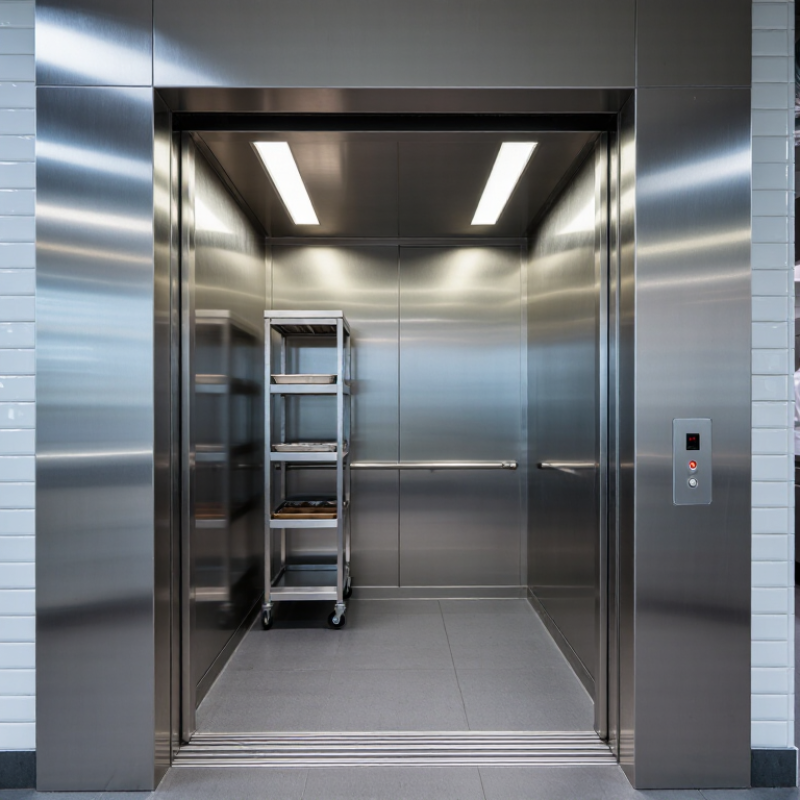
Food lifts rated from 50 to 500 kg suit many kitchens, bakeries, and food-service warehouses. Their usual speed range is 0.2–0.5 m/s, balancing throughput with controlled loading. At 0.5 m/s, a three-metre lift takes about six seconds before loading and unloading. Real cycles take longer. That detail is often overlooked.
The 2024 UNEP Food Waste Index Report estimates that 1.05 billion tonnes of food were wasted in 2022. Reliable vertical transport cannot solve waste alone, but it can reduce handling damage and unnecessary transfers. Buyers should check rated load, platform size, travel height, duty cycle, emergency stopping, and cleaning access. Stainless surfaces, sealed controls, and sloped ledges support the hygiene principles in ISO 14159 and EN 1672-2. A polished specification is not enough. Poor drainage can still create problems.
Tips: Match capacity to the heaviest routine load, not an optimistic average. Keep at least a 15% working margin where site conditions allow. Ask suppliers for cycle-test records, noise data, installation drawings, and maintenance intervals. Confirm local electrical requirements and guarding rules before ordering. The 0.2–0.5 m/s range looks narrow, yet speed changes affect waiting time, impact risk, and operator habits. I would test a loaded cycle on-site; catalogue figures can feel too neat.
Typical restaurant food lifts are specified across a 50–500 kg rated-load range, with lifting speeds commonly between 0.2 and 0.5 m/s. Compact units suit smaller service loads, while higher-capacity systems support central kitchens, hotels, and large-volume food operations.
For global buyers, a restaurant food lift is a safety-critical supply decision, not merely a kitchen convenience. The selection file should identify the governing market standard before comparing price, delivery time, or finishes. EN 81-3 addresses electric and hydraulic service lifts in European applications. ASME A17.1/CSA B44 governs elevator safety expectations across many North American jurisdictions. Local adoption still matters.
Ask suppliers for a clause-by-clause compliance matrix, risk assessment, test records, and installation instructions. Confirm rated load, travel, landing-door interlocks, emergency controls, shaft protection, and cleaning access. For food facilities, stainless surfaces and sealed controls help, but hygiene claims need measurable specifications. The European Lift Association’s market statistics indicate Europe has several million installed lifts, making maintenance access a practical selection concern, not a cosmetic detail.
ISO 9001 evidence can show controlled drawings, traceable components, corrective-action records, and supplier audits. The ISO Survey of Management System Standard Certifications 2022 recorded 1,265,216 ISO 9001 certificates worldwide. That signals broad process adoption, not automatic lift compliance. Treat the certificate as supporting evidence, never as a substitute for EN 81-3 or ASME A17.1/CSA B44 evaluation. Request independent inspection and witnessed load testing before shipment and after installation. I would also inspect one finished unit. Paperwork can disappoint. Small gaps matter.
When comparing restaurant food lift suppliers, start with stop accuracy and shaft dimensions. A lift serving three levels may need four programmed stops, including loading access. Ask for drawings, not estimates. Measure clear width, pit depth, overhead room, and door swing on site. In one installation, a 20-millimeter shaft error caused costly masonry changes. That mistake was avoidable.
Materials should match cleaning routines and humidity. Stainless steel cabins and trays resist daily washing, but weld quality matters more than a shiny finish. Request sample seams, load-test records, and a stated rated capacity. Confirm whether guides, doors, and control panels use compatible materials. Food contact areas may require specific local approvals, so suppliers should explain their documentation clearly. Vague answers are a warning.
Warranty terms need practical detail. Check coverage for the motor, controller, door interlocks, and labor. A two-year promise means little if travel costs are excluded. Lead time should include engineering, production, inspection, shipping, and installation support. Ask for milestone dates and spare-parts availability near your market. I prefer a realistic schedule over a fast quotation. Delays still happen, especially after drawing changes. Build a small buffer, and record every approval in writing.
For global restaurant projects, a food lift supplier must prove more than lifting capacity. CE and UKCA documents should match the intended market, machine type, and safety assessment. UL requirements may differ by product category and installation location. Ask for current certificates, test reports, wiring diagrams, and declaration documents. Do not accept a logo on a brochure as proof. Details matter.
HACCP thinking should guide design from delivery to daily cleaning. Smooth internal walls, sealed joints, removable panels, and drainage-friendly floors reduce hidden residue. Food-contact surfaces should use traceable food-grade stainless steel, commonly 304. Corrosive or salty environments may require 316. Welds should be polished and inspected. A lift that looks clean can still trap moisture behind a panel. That weakness deserves attention.
Experienced suppliers should provide load tests, emergency procedures, maintenance schedules, and operator training. Request records showing repeated operating cycles, not only an ideal factory test. Check door interlocks, emergency lowering, ventilation, and sanitation access. Local installers must understand power standards and building conditions. Specifications are sometimes incomplete. That happens. A careful supplier admits these gaps and corrects them before shipment. Buyers should confirm spare-part availability, response times, and document language before approving the order.
For global buyers, installation cost usually ranks third in a food lift’s ten-year cost profile. A practical benchmark places installation near 20–30% of initial ownership cost. Structural openings, fire-rated doors, and local certification can change this sharply. Small kitchens are not always cheaper.
Maintenance often ranks first. Industry lifecycle guidance from RICS recommends evaluating scheduled service, replacement parts, labor, and downtime together. In food-service environments, grease, heat, moisture, and frequent loading increase service demands. A low purchase price can age badly. Ask suppliers for ten-year maintenance schedules, response times, and spare-parts availability.
Energy use usually ranks fourth, but it still deserves measurement. ISO 25745-2 provides a method for assessing lift energy performance, including standby and travel modes. The U.S. Energy Information Administration reported an average commercial electricity price of about 13 cents per kilowatt-hour in 2023. At 1,500 operating hours yearly, even modest motor differences accumulate. A realistic ranking is maintenance, downtime risk, installation, energy, then residual value. This order is imperfect. Local tariffs, duty cycles, and kitchen layouts can reverse it. For a fair 10-year TCO, compare audited energy assumptions, five-year parts pricing, installation exclusions, and annual service escalation. Supplier quotations should show every assumption clearly.
Identify the governing market standard before comparing price or delivery time. European projects may use EN 81-3. North American projects may use ASME A17.1/CSA B44. Local adoption still matters.
Request a clause-by-clause compliance matrix and risk assessment. Ask for test records, wiring diagrams, and installation instructions. A declaration document alone may not explain practical risks. Paperwork can disappoint.
Confirm rated load, travel distance, and landing-door interlocks. Check emergency controls, shaft protection, and cleaning access. Verify ventilation and emergency lowering functions. Small gaps matter.
Look for smooth internal walls, sealed joints, and removable panels. Drainage-friendly floors can reduce hidden residue. Food-contact surfaces should use traceable, food-grade stainless steel. Clean-looking equipment may still trap moisture behind a panel.
Common food-contact areas often use 304 stainless steel. Salty or corrosive environments may require 316 stainless steel. Welds should be polished and inspected. The specification should state the grade clearly.
No. Quality certification can support evidence of controlled drawings and traceable parts. It may also show corrective-action records and supplier audits. It does not replace safety-standard evaluation or independent inspection.
Request independent inspection and witnessed load testing before shipment. Repeat suitable testing after installation. Ask for records showing repeated operating cycles. One ideal factory test is not enough.
Confirm spare-part availability, response times, and document language. Inspect maintenance access before approving the design. Local installers should understand power standards and building conditions. I would inspect one finished unit personally.
Choosing the right Restaurant Food Lift supplier requires more than comparing purchase prices. For most restaurants, hotels, and catering facilities, a practical food lift should support approximately 50–500 kg, operate at 0.2–0.5 m/s, and match the building’s shaft dimensions and service requirements. Buyers should evaluate compliance with EN 81-3, ASME A17.1/CSA B44, and ISO 9001, while also checking the number of stops, shaft size, construction materials, warranty coverage, and expected lead time. Food-contact areas should use durable, easy-to-clean, food-grade steel and support HACCP-based hygiene procedures.
Global projects may also require CE, UKCA, or UL-related conformity documentation, depending on the installation market. A reliable comparison should include total ownership costs, not only the initial quotation. Installation complexity, energy consumption, preventive maintenance, spare parts, and downtime can significantly affect the 10-year TCO. Ranking suppliers by transparency, technical support, safety documentation, and long-term operating value helps global buyers select a dependable solution suited to their facility and regulatory environment.
Bluetech