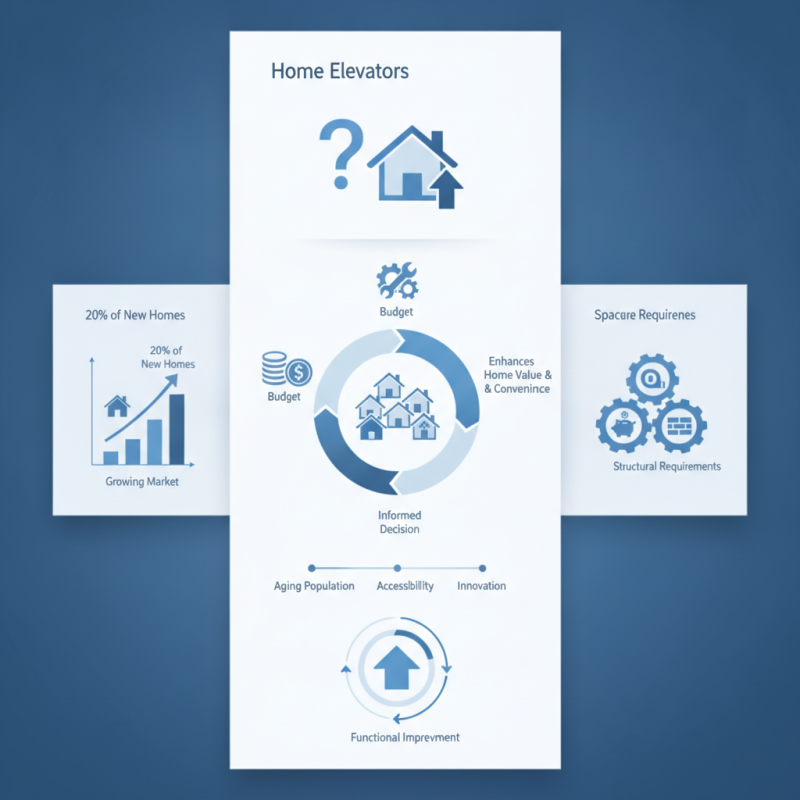
Home elevators are becoming increasingly popular in modern residences. According to a report by the National Association of Home Builders, about 20% of new homes include some type of vertical lift. This trend is driven by the aging population and the need for accessibility. A "Home Elevator With Structure" can enhance convenience and overall home value.
There are countless options available, catering to various budgets. From traditional models to more innovative designs, there is something for everyone. A report by Market Research Future indicates that the home elevator market is projected to grow by 11% annually over the next five years. This growth reflects the rising demand for accessibility features.
However, choosing the right home elevator involves careful consideration. Cost, space, and structural requirements play essential roles. Many homeowners may overlook the importance of compatibility with their existing structures. Investing in a home elevator is not just about luxury; it is a functional improvement. The choices available can be overwhelming, and mistakes can be costly. Understanding the options is crucial for making an informed decision.
Home elevators come in various structural designs, catering to different needs and budgets. The most common types include shaftless elevators,
pneumatic elevators, and traditional hoisted elevators. Each type has unique features that can influence installation and usability.
Shaftless models are ideal for small spaces. They are easy to install and require minimal structural modifications.
However, they have weight limits that may be restrictive for larger households.
Pneumatic elevators use air pressure for movement, making them a modern and energy-efficient option. Their sleek design fits well in contemporary homes.
Still, they may require more maintenance than traditional models. Traditional elevators, while classic, often demand extensive construction work. They provide ample weight capacity and customized features.
However, this can lead to a longer installation process.
Choosing the right home elevator involves considering both design and functionality.
It's easy to get caught up in aesthetic appeal. However, practical features matter just as much. Budget constraints should influence your choice as well.
Some options may be more cost-effective in the long run. Evaluating your specific needs and space constraints is essential. It's a balancing act between style, durability, and functionality.
When selecting a home elevator, budget is a primary concern. Deciding on the type of elevator affects cost significantly. There are hydraulic, pneumatic, and cable-driven options. Hydraulic elevators generally cost more due to installation complexity. They can range from $20,000 to $30,000. On the other hand, pneumatic elevators can be more affordable, starting at around $15,000. This choice offers a modern aesthetic.
Building materials also play a role in pricing. High-quality steel and glass components enhance durability but increase costs. Consideration of maintenance is essential. A well-maintained elevator requires about $250-$500 annually. Ignoring maintenance can lead to costly repairs and replacements.
Accessibility features should not be overlooked. Adding features like voice activation increases convenience but also adds to the overall expense. Industry reports highlight that around 37% of homeowners value technology integration. A well-thought-out budget accounts for initial costs and future needs. Reflecting on options requires careful thought. Balancing cost and functionality is key in the decision-making process.
| Elevator Type | Structure Option | Budget Range | Weight Capacity | Speed (ft/min) |
|---|---|---|---|---|
| Hydraulic Elevator | Shaft Required | $25,000 - $50,000 | 2,500 lbs | 30 |
| Cable-Driven Elevator | Shaft Required | $20,000 - $40,000 | 2,000 lbs | 50 |
| Vacuum Elevator | No Shaft Required | $35,000 - $60,000 | 450 lbs | 30 |
| Screw-Driven Elevator | No Shaft Required | $15,000 - $30,000 | 950 lbs | 20 |
| Pneumatic Elevator | No Shaft Required | $30,000 - $50,000 | 500 lbs | 15 |
When considering home elevators, budget constraints are a major concern for many homeowners. Elevators come in various price ranges, catering to different financial situations. Cost-effective options include simple models that offer essential functionality without extravagant features. This can be a practical choice for small homes or those who prioritize basic access.
Another budget-friendly option is a pneumatic elevator. These elevators use air pressure for lifting. They require minimal space and can often be installed in existing homes. Additionally, their installation often has less invasive construction work. Yet, they might not offer the same weight capacity as traditional models. Homeowners should weigh the trade-offs involved.
One common mistake is underestimating maintenance costs. While an elevator may fit your budget initially, ongoing care can add up. Research proves that proper maintenance is vital for longevity and safety. Many people overlook this aspect, leading to future expenses. Evaluate both installation and long-term costs. This way, you ensure you make a sound investment.
Luxury home elevators offer a blend of convenience and style. Many homeowners now seek unique features that reflect personal taste. According to a recent industry report, over 30% of new homes incorporate some form of residential lift. This trend reflects a growing demand for customized designs and functional enhancements.
Customization options vary widely. Homeowners can choose finishes ranging from polished wood to sleek glass. Lighting features, such as LED systems, add ambiance. Moreover, smart technology integration is becoming popular. Home elevators can now connect with home automation systems. This ensures ease of access and improved safety.
However, not all customization is straightforward. Budget constraints often limit options. Homeowners may face dilemmas between function and aesthetics. Prioritizing essential features can lead to satisfying solutions. A careful balance between style and safety is necessary. As the luxury sector grows, understanding differentiation will help in making informed choices.
Home elevators are increasingly popular. However, safety must always come first. According to the Elevator Escalator Safety Foundation (EESF), over 30,000 home elevator installations are done each year in the U.S. Yet, only 12% of homeowners are fully aware of safety regulations.
When installing a home elevator, certain standards apply. The American Society of Mechanical Engineers (ASME) outlines essential safety guidelines for residential elevators. Compliance with ASME A17.1 can prevent accidents and ensure reliable operation. These regulations cover aspects like load capacity and emergency protocols. Many instances show that inadequate safety measures lead to serious injuries.
In many cases, homeowners are unaware of these standards. This lack of knowledge can lead to unsafe installations. A report from the National Association of Elevator Contractors reveals about 20% of elevator-related incidents occur due to improper installation. Those using home elevators often overlook the importance of regular inspections. Ignoring this can result in costly repairs and safety risks. Awareness and adherence to safety regulations are crucial in fostering a reliable home elevator experience.
: The common types include shaftless, pneumatic, and traditional hoisted elevators. Each has unique features for different needs.
Shaftless elevators are ideal for small spaces. They require minimal modifications but have weight limits for larger households.
Pneumatic elevators use air pressure for movement. They are energy-efficient but might need more maintenance than traditional models.
Consider design, functionality, budget, and space constraints. Balance style and durability with practicality.
Budget affects the type and installation complexity. Hydraulic elevators are typically more expensive than pneumatic options.
Maintenance typically costs between $250 and $500 annually. Ignoring it can lead to more significant expenses later on.
Yes, features like voice activation enhance convenience. However, they can also increase overall costs significantly.
More complex installations, like hydraulic elevators, generally lead to higher initial costs due to labor and time required.
It's critical to evaluate options to ensure a balance of cost and functionality. Decisions impact both current and future needs.
In the quest for the perfect home elevator with structure options that fit every budget, it is vital to explore the various types and their structural designs. From compact models ideal for small spaces to larger, luxury installations, the choices available cater to diverse needs and aesthetic preferences. When choosing a home elevator, factors such as installation space, user requirements, and maintenance costs must be carefully considered to ensure a suitable match for your budget.
In addition, cost-effective options exist that do not compromise on quality or safety standards. For those seeking luxury home elevators, an array of features and customization choices are available to create a bespoke experience. Regardless of the budget, it’s crucial to stay informed about safety regulations to ensure a secure and compliant installation, allowing homeowners to enjoy their lifts with peace of mind.

Bluetech