Choosing the right Dumbwaiter Lift in 2026 requires more than comparing prices and platform sizes. A reliable decision begins with the building’s daily workflow. A restaurant may need to move hot dishes between floors, while a hotel may transport linens, amenities, or cleaning supplies. Each use creates different demands.
Measure the available shaft, door width, travel height, and landing space before contacting suppliers. Record the heaviest routine load, not only the average package. Small details matter. A 100-kilogram lift may suit a café, but a busy hotel could need greater capacity and faster recovery between trips. Consider tray dimensions, loading height, controls, ventilation, and noise near guest rooms or dining areas. Safety features also deserve close attention, including interlocked doors, emergency stops, overload protection, and dependable leveling. Local building requirements and inspection procedures should guide the final specification. Product brochures can help, but they cannot replace a site assessment by a qualified installer.
Service access is another practical test. Ask how quickly technicians respond, which components remain available, and what maintenance the contract includes. A low purchase price may become expensive when a worn cable, sensor, or controller stops daily operations. That assumption fails. Many buyers focus on lifting capacity and overlook cleaning routines, staff training, or future workload increases. We have seen small planning errors create awkward loading angles and repeated delays. This guide examines the main lift types, specifications, costs, safety considerations, and supplier questions. It also recognizes that no single Dumbwaiter Lift fits every property. The best choice balances performance, reliability, space, and long-term operating reality.
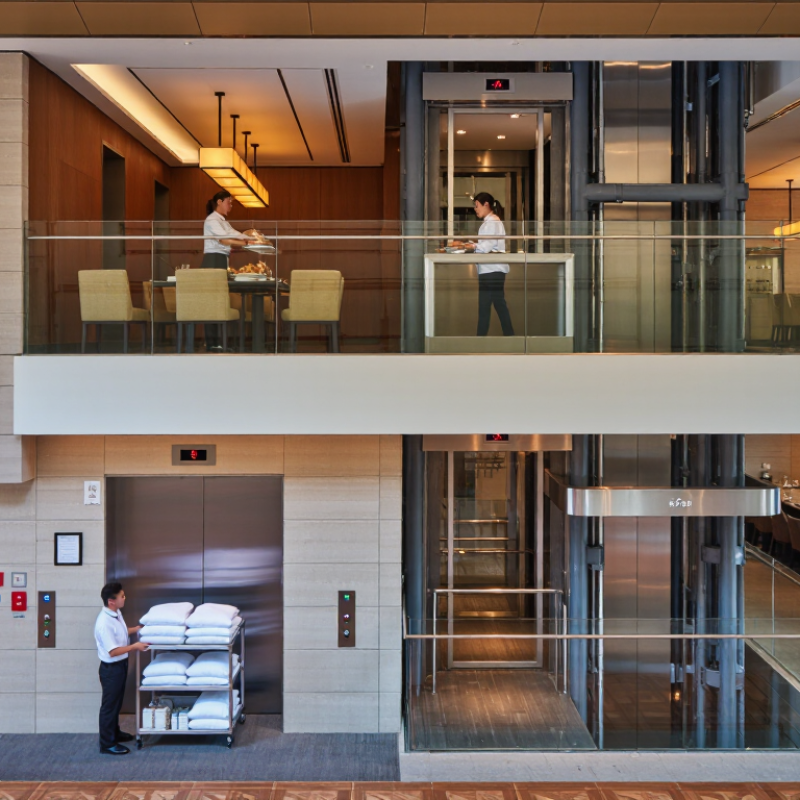
Choosing a dumbwaiter starts with capacity and speed, not appearance.
EN 81-3:2000+A1:2008 limits dumbwaiters to 300 kg rated load and 1 m/s maximum speed. These are boundaries, not automatic design targets.
A 300 kg limit includes the goods and their container. A loaded trolley, metal tray, and wet kitchen supplies can quickly approach that figure. Leave practical headroom. For example, a 250 kg working load may suit a 300 kg-rated unit better than continuous operation at its limit. The standard also addresses landing doors, safety devices, suspension, and testing. Ask for the conformity documents and the manufacturer’s load calculations. Do not rely on a brochure alone.
Speed needs equal care. At 1 m/s, a poorly planned stop can shift stacked dishes or spill liquid. Lower speeds may improve control in restaurants, hotels, and small clinics. ISO 25745-2 provides methods for evaluating lift energy performance, but energy figures depend on travel distance, traffic, standby time, and loading cycles. Industry reports often present averages; your building may behave differently. That is the uncomfortable part.
Measure the route. Record peak deliveries, trolley dimensions, door clearances, and daily cycles. Then compare the result with EN 81-3 and local inspection requirements. A faster lift is not always the better lift.
Travel changes everything. For short, low-rise routes and heavy loads, hydraulic drives often provide strong starting torque and steady lifting. They suit intermittent service, but oil heating can reduce efficiency during repeated cycles. Screw drives are compact and mechanically simple. They work well for light loads, limited travel, and occasional deliveries, although their slower speed may frustrate busy kitchens. Traction drives usually fit taller shafts, longer travel, and frequent operation. Their counterweight reduces energy demand, but installation requires careful alignment, suspension planning, and sometimes additional overhead space.
Duty cycle matters more than peak capacity. Count every trip during the busiest hour, including loaded and return movements. A lift making 20 short trips may experience more stress than one making five long trips. The International Energy Agency’s Energy Efficiency 2023 report states that buildings consume about 30% of global final energy. Efficient drive selection supports lower operating demand, but real performance depends on loading, standby time, maintenance, and control settings. Use ASME A17.1/CSA B44 or EN 81-3 requirements when confirming safety, guarding, and installation conditions.
Tips: Measure travel, shaft clearance, loading height, and daily cycles before requesting quotations. Ask for rated duty-cycle data, not only maximum load. Compare motor input, cycle time, noise, emergency lowering, and service access. A simple spreadsheet often exposes the wrong choice. I have seen short routes over-specified with traction systems, while busy routes were underestimated. That judgment needs checking. A local qualified engineer should verify the final design and code pathway.
Choosing the right dumbwaiter lift in 2026 starts with jurisdiction, not catalogue capacity. EN 81-3 applies to service lifts in relevant European installations, while ASME A17.1/CSA B44 governs many North American projects. Their classifications, guarding rules, clearances, and landing protections are not interchangeable. Confirm the applicable edition with the local authority.
A compliant shaft drawing should show pit depth, overhead clearance, guide rails, buffers, access doors, ventilation, and fire separation. At every landing, specify the door type, sill detail, interlock, call station, and maintenance access. One missing landing measurement can create expensive masonry changes. It happens.
Match the shaft to the real route. Measure trays, crates, trolleys, and hand clearance, rather than relying on rated load alone. A 200-kilogram payload may still need a wider car and stronger landing structure. The International Energy Agency’s Buildings report notes that buildings consume about 30% of global final energy. Efficient standby controls and short travel distances therefore deserve attention, although compliance comes first. The European Commission also reports that buildings represent roughly 40% of EU energy consumption. That statistic is broad, not dumbwaiter-specific, so it should not drive an unrealistic payback claim. Review the layout with a qualified lift designer, the building engineer, and the approving inspector before construction.
When selecting a dumbwaiter lift, inspect the safety controls before comparing speed or finish. Door interlocks should prevent movement when any landing door remains open. They must also resist casual bypassing during cleaning or loading. Test each interlock with the car stationary, then record the result. Small gaps around doors can reveal poor alignment.
Overload protection Overload protection should match the lift’s rated capacity and expected loads. A practical test uses typical trays, not only empty operation. The system should stop upward travel when weight exceeds the limit. It should also provide a clear fault indication. Do not confuse overload protection with a governor. A governor responds to unsafe car speed, while overload protection monitors weight. Both need accessible inspection points and documented maintenance.
Emergency stops Emergency stops deserve careful placement. A reachable button inside the car and near working areas can reduce response time. It should stop hazardous motion without creating a second danger. A qualified technician should verify stopping distance, reset behavior, and control isolation.
Local requirements differ, so installation drawings need review by a competent inspector. I once gave too much attention to rated load and too little to reset procedures. That was a useful correction. A system can stop correctly yet remain confusing under pressure. Clear labels, lighting, and routine drills matter. Test records matter too.
Evaluate Energy, Maintenance, and Total Cost Across a 10-Year Life Cycle
Choosing a dumbwaiter lift should begin with daily use, not the purchase price. Count trips, load weight, travel height, and peak service hours. A lift carrying trays between a kitchen and dining area may run dozens of cycles each day. Energy use depends on motor efficiency, standby power, control settings, and travel frequency. Ask for measured consumption data, not broad estimates.
Maintenance can shape the real cost. Review service intervals, access to wearing parts, inspection requirements, and expected downtime. A small fault during a busy lunch service can create labor delays and manual carrying risks. Keep a maintenance log from the first month. It reveals patterns that a sales brochure will not. Also check whether technicians can reach the drive system without removing walls or fixed equipment.
Build a ten-year cost model with installation, electricity, planned servicing, replacement parts, repairs, and possible downtime. Use three usage scenarios: light, normal, and heavy. My first calculation would probably underestimate emergency repairs. That is worth questioning. A cheaper lift may consume less today but require more frequent attention later. Conversely, a highly efficient model may not repay its higher price in a lightly used building. Compare annual cost per delivery, not only the invoice total. Leave room for changing menus, staffing, and operating hours.
The rated load cannot exceed 300 kg, including goods, trays, and containers. This is a limit, not an ideal daily target.
A 250 kg working load may suit a 300 kg-rated unit better. Wet supplies and metal trays add weight quickly. Leave practical headroom.
Request conformity documents, load calculations, testing records, and maintenance details. A brochure alone is not enough.
No. At high speed, stacked dishes may shift and liquids may spill during stopping. Lower speeds can provide better control.
Measure the travel route, door clearances, trolley size, peak deliveries, and daily operating cycles. Small clearance errors can disrupt loading.
Consider travel distance, traffic, standby time, and loading cycles. Published averages may not match your building. That part deserves doubt.
Interlocks should prevent movement when any landing door remains open. Test each one while the car is stationary. Record the result.
Overload protection monitors weight and should stop upward travel beyond the limit. A governor responds to unsafe car speed. They are not interchangeable.
Place reachable controls inside the car and near working areas. Verify stopping distance, reset behavior, and control isolation. Clear labels help under pressure.
A system may stop correctly yet confuse people afterward. Use lighting, simple instructions, and recorded tests. I once underestimated reset procedures. That was a useful correction.
Choosing the right Dumbwaiter Lift begins with clearly defining the required load capacity, travel height, operating frequency, and speed. Under EN 81-3, dumbwaiters are generally limited to 300 kg and 1 m/s, making it essential to confirm that the selected system matches the building’s daily demands. Traction, hydraulic, and screw-drive designs should be compared according to travel distance, duty cycle, installation conditions, and expected usage. Shaft dimensions, landing layouts, access arrangements, and machine-room requirements must also align with EN 81-3 and applicable ASME A17.1/CSA B44 provisions.
Safety and long-term value are equally important. The specification should include reliable landing interlocks, overload protection, governors where required, emergency stops, and suitable control systems. Energy consumption, routine servicing, spare-part availability, downtime risk, and replacement costs should be evaluated over a 10-year life cycle rather than relying only on the initial purchase price. A properly planned Dumbwaiter Lift can provide safe, efficient, and dependable vertical transport when performance, compliance, maintenance, and total cost are considered together.

Bluetech